

At 1:45, the Strings Pull Down
Notes on Shame, Resurrection, and What We Bury to Survive


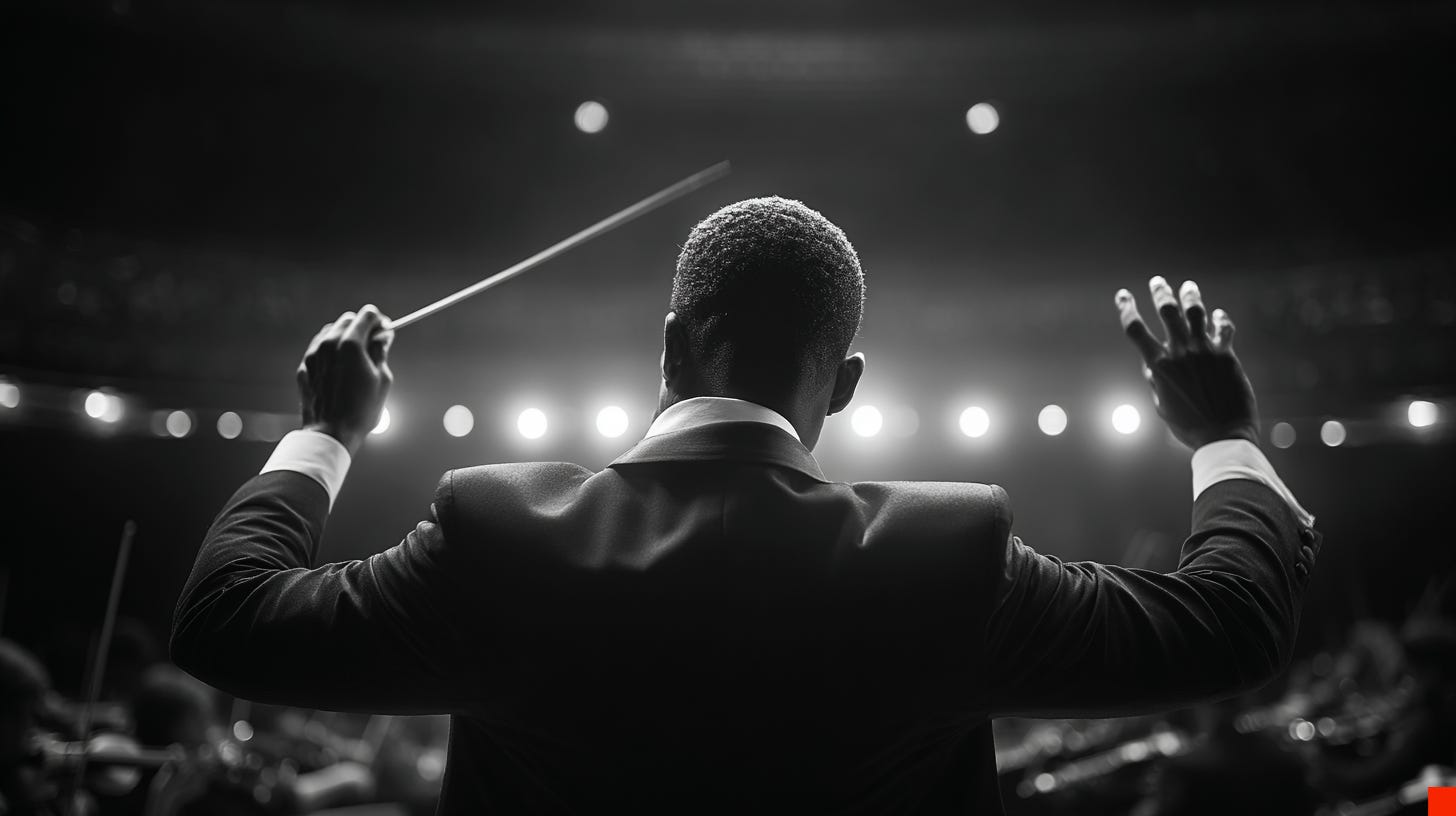
“What I had in mind was a struggle, in which victory is furthest from the protagonist at the very moment when he believes it to be nearest.”
—Gustav Mahler, in a letter about Symphony No. 2 (1894)
Listen: Gustav Mahler, Symphony No. 2 in C minor (“Resurrection”), Finale.
I step to the podium.
The score is open.
5 minutes and 9 seconds remain to ask what 80 minutes could not.
Gustav Mahler’s Symphony No. 2 in C minor, “Resurrection,” finale movement.
What happens after death?
Not death as metaphor.
Death as lived fact.
The part of you that has to die so another part can breathe.
Mahler wrote this between 1888 and 1894. Jewish by birth, Christian by conversion, belonging fully to neither. An exile conducting his own funeral, then daring to ask: what if the corpses rise? He called this movement the march of the dead. Corpses climbing from graves to face judgment. The Dies irae woven through the score like a thread of reckoning. Day of Wrath. Day of witnessing what we buried.
The finale opens with catastrophe.
Pesante.
Full orchestra.
Fortissimo.
The sound of the earth insisting on its weight.
Crashing chords that sound like the earth splitting. Then the orchestra begins its work: testing every possible language for annihilation before it can ask about resurrection.
At 1:45, after all that, a flute enters. Soft. Birdlike.
Then the male chorus enters from a distance.
Very quiet.
Unaccompanied.
Aufersteh’n, ja aufersteh’n wirst du.
Rise again, yes you will rise again.
Not proclaiming.
Asking.
I’ve been conducting this movement for three years. Not Mahler’s version. Mine. Learning to cue the strings that carry my shame, the brass that announce my refusal to stay buried, the voices that ask if I’m allowed to rise, then rise anyway.
The baton is in my hand.
The orchestra is waiting.
I raise it.
The strings enter. Heavy, descending, pulling down like grief has mass. This is how the finale begins: with weight. With the recognition that you can’t skip to resurrection. You have to name what died first. Sit in the grave before you ask about leaving it.
I let them descend. The cellos take the melody, dark and inexorable. The Dies irae fragment surfaces, those four notes that have meant judgment since the Middle Ages. Day of Wrath, that day will dissolve the world in ashes. Mahler knew. You can’t have resurrection without reckoning.
I’m conducting the funeral now. The one I didn’t know I was attending three years ago when I thought I was just tired, just overwhelmed, just doing what good people do—showing up for everyone’s crisis but my own.
The strings pull lower. I let them.
This is the march of the dead. The procession of every version of myself that had to be buried: the one who believed my HIV status was proof I deserved harm. Who thought my diagnosis meant I should be grateful for crumbs. Who gave and gave until there was nothing left, then called the exhaustion love.
I kept saying yes.
To friendships that required my silence.
To people who needed me pliable, endlessly forgiving, useful.
The strings know this sound. They’ve been playing it for years, the sound of a body teaching people how to consume it and call it care.
The violas join.
Then the second violins.
Layer by layer, the descent accumulates.
This is what Mahler understood: grief isn’t a moment. It’s architecture. It has to be built carefully, thoroughly, or the resurrection won’t hold.
I conduct them through it.
Every ghost.
Every version of myself that bent until breaking.
Every moment I absorbed someone else’s crisis and disappeared during my own.
The strings reach their lowest register. The basses so deep you feel them in your chest rather than hear them.
Then a shift. Barely perceptible.
The strings begin to climb. Tentative. Testing whether upward motion is even possible after that much weight.
The brass enter now. Not tentative like the strings. Sharp. Declarative.
This is the sound of disruption.
I conduct them in forte. Aggressive. This is resurrection as threat, the moment three years ago when I started setting boundaries and people called it cruelty. When I started saying no and they called it abandonment.
The brass swell. Dissonant. This is the sound of ecosystems collapsing when you stop participating in your own depletion.
I was in my car. Late afternoon light. I’d rehearsed the words for days. Told them I can’t be available the way I used to be. I need you to show up for me the way I’ve been showing up for you.
They looked at me like I’d announced something violent.
“You’re being selfish.”
Not angry.
Confused.
Like I’d violated some fundamental law of our friendship.
The brass hit a sharp cluster of notes. Unresolved. Hanging in the air like a question no one wants to answer.
Three weeks later, they left. Didn’t say it was about the conversation. Didn’t have to. I’d stopped being useful in the way they needed.
The brass section builds now, the French horns carrying a melody that sounds almost martial. This is the sound of systems revealing themselves. My boundary became their abandonment story. My healing became my cruelty.
I’m conducting the recognition now: systems require your depletion to function. Not just friendships. Everything.
I’m undetectable. Have been for years. My viral load so low it can’t be measured, can’t be transmitted. But I still go to the clinic every three months. Still sit in waiting rooms with posters about prevention I’ve memorized. Still let them draw my blood to confirm what we already know: I’m fine. I’m thriving.
The brass crescendo. Louder now. This is the sound of infrastructure that needs your sickness to sustain itself. The medical surveillance. The culture that monetizes Black suffering. The country that profits more from our dying than our living.
The trumpets enter, sharp and bright against the darker horns. They’re playing the Dies irae fragment, but inverted, rising instead of falling. Judgment turned inside out. The question becoming: who built these graves in the first place?
I conduct them through it. The brass declaring what I learned: my healing didn’t liberate me from these systems. It revealed how much they needed me unchanged. How resurrection isn’t celebration. It’s disruption. It’s the body climbing out and asking why it was put there.
The brass hold a fortissimo chord. Massive. Unrelenting.
Then—
They pull back. Suddenly quiet.
The woodwinds enter, soft and searching. Flutes and clarinets weaving a melody that sounds like memory.
The tempo slows. I adjust my conducting, longer, smoother gestures. This is where the full orchestra comes in. Not just strings. Not just brass. Everyone.
This is the sound of lineage.
The woodwinds carry a melody that feels ancient even though Mahler wrote it in 1894. This is what he knew: some questions are older than the people asking them.
What happens after death? Black artists have been answering that question since the first ship. After the Middle Passage. After slavery. After Reconstruction’s betrayal. After every policy designed to ensure we don’t survive. After the diagnosis that’s supposed to end you but doesn’t.
The strings join the woodwinds now. Then the horns, quiet for once, blending rather than announcing. This is the sound of inheritance. Of recognizing you’re part of a tradition you didn’t know you were carrying.
I’m conducting Mahler to the spirituals he never heard but somehow understood.
The spirituals to gospel.
Gospel to Sam Cooke.
Cooke to Aretha.
Aretha to Marvin, asking what’s going on.
Marvin to Kendrick, asking if he’s worth saving.
Kendrick to me.
Three years later.
Driving.
Recognizing my inheritance inside a dead white man’s symphony.
We keep making resurrection music because we keep needing resurrection. Because our survival has always been miraculous and never guaranteed.
The orchestra swells now. All sections playing. The funeral march theme returns in the cellos while the violins carry something that sounds almost like hope. Both melodies at once. Mahler conducting grief and resurrection as twins, not opposites.
This is what the Black church taught and didn’t teach: every Sunday is another rehearsal for rising.
Every praise break, another practice run for what it feels like when the body remembers it is holy.
But what was left unsaid, what Mahler knew and I am learning, is this: resurrection doesn’t erase the funeral.
It contains it.
The grave is part of the rising.
You don’t transcend.
You integrate.
The orchestra builds. I’m conducting with both hands now, larger gestures, bringing every section into conversation with each other. The strings still carrying the funeral march. The brass still announcing disruption. The woodwinds still singing lineage. All of it simultaneously. Accumulating.
Then silence.
Brief. Terrifying.
The orchestra cuts off completely.
I hold the baton still. Suspended. This is the moment Mahler built into the score. The pause before the question can finally be asked.
In the silence, I hear it: an offstage trumpet. Distant. Not in the score I’m conducting. Not something I called for.
This is grace arriving from elsewhere.
My dad reads every essay. We talk about them on the phone sometimes, during our weekly calls. He tells me what landed. What he didn’t know I was carrying. The friends I named in my first collection as the ones who saved me, they haven’t read a single page. I asked one once. The answer was gentle: “I’ll show up for you in other ways.”
The trumpet sounds again. Farther away now. Fading.
I understand. They loved the version of me that needed saving. This version, the one who writes, who builds, who rises, they don’t know what to do with him.
The offstage trumpet disappears completely.
Three years of rising taught me to depend on myself. To stop creating soft landings for people who’ve already decided not to jump.
I raise the baton again.
This is it.
1:45.
A flute enters. Soft, almost inaudible. Marked in Mahler’s score as wie eine Vogelstimme, like a bird call. The sound of something small and alive after all that death.
Then—
I cue the male chorus.
They enter from a distance.
Very quiet.
Unaccompanied.
Aufersteh’n, ja aufersteh’n wirst du.
Rise again, yes you will rise again.
Not proclaiming.
Asking.
Their voices spare, unadorned, testing whether the word resurrection can be spoken at all after sitting in the grave.
I conduct them carefully. This is the most delicate part of the finale. The moment Mahler spent 80 minutes preparing for. The question the entire symphony built toward.
The male voices ask: Am I allowed to rise?
I keep conducting. Keep building. The strings enter beneath the chorus, so quiet they’re almost felt rather than heard. Supporting. Lifting.
The chorus grows slightly louder. Still asking, but with more breath now. More voices joining. Tenors and basses in unison, testing the question together.
This is where I’ve been living for three years. In the asking. In the part where you’re not certain if you’re allowed but you’re doing it anyway.
The altos join now, female voices weaving through the male chorus. The question becomes layered. Aufersteh’n, rise. The word itself climbing through the harmonies.
I’m conducting three years of therapy into this moment. Three years of boundaries. Three years of learning that being held doesn’t require earning it first. Three years of depending on myself because the majority of my adult life was spent bending to other people’s needs.
The chorus builds. More voices. The strings louder now beneath them, the melody from the funeral march transformed, not pulling down anymore but lifting. The same notes, different direction.
This is what resurrection actually sounds like: not the erasure of grief but its integration. The Dies irae fragment returns in the brass, but quiet now, woven through the rising voices. Judgment and grace in the same breath.
The full chorus enters. Sopranos high above the other voices, bright and clarifying. The orchestra swells beneath them, strings, brass, woodwinds, all sections playing the accumulated themes. Everything Mahler built across 80 minutes converging in this movement.
I’m conducting with my whole body now. The baton moving in wider arcs. This is Bernstein’s controversial interpretation, ecstatic, emotional, flamboyant. Some called it too much. But I think he understood: you can’t conduct resurrection with restraint. You have to risk looking foolish. Risk being too much.
The chorus sings louder. The question becoming more insistent. Aufersteh’n, rise. But still not proclamation. Still asking permission even as they’re already rising.
I know that sound. I’ve made it. I make it still.
The strings crescendo. The brass join forte now, the trumpets returning with the inverted Dies irae, judgment turned to possibility. The woodwinds running scales that sound like accumulation, like voices layering upon voices.
This is resurrection as practice. As the daily choice to keep rising even when you’re not sure you’re allowed. As the decision to write whether anyone reads. To build whether anyone witnesses. To show up on your own page first.
The orchestra builds. Every section at full volume now. The chorus singing in four-part harmony, the question multiplied across hundreds of voices: Aufersteh’n, ja aufersteh’n wirst du.
I’m conducting 400 years of Black artists into this moment. Every spiritual that promised morning. Every gospel song that rehearsed resurrection. Every blues that proved we were still breathing when the country insisted we should be dead.
The music accumulates. Mahler marked this section mit Aufschwung, with uplift, with soaring. The voices climb higher. The orchestra pushes beneath them.
This is where Mahler would take it to climax. Where Bernstein would pull out every stop, organ entering, bells chiming, the full catastrophic triumph of resurrection proclaimed.
But I don’t take it there. Not yet.
Because I know what Mahler knew and what three years taught me: resurrection isn’t the moment you arrive. It’s every moment after, when you have to keep choosing to stay risen.
The music is still building. The chorus still singing. The orchestra still playing. But I hold them at forte, not fortissimo. Keep them in the question, not the answer.
Because this is where I actually live. At 1:45 and beyond. Still asking. Still rising. Still conducting the daily practice of believing I’m allowed.
2026 is coming. I’m carrying something into it I didn’t have three years ago: the belief that I don’t need permission to rise. That my survival isn’t contingent on anyone’s approval. That writing isn’t what I do when I have time, it’s where I live, and everything else is the interruption.
The strings pull down briefly, the funeral march theme returning even here, even now. Because the grave is part of the rising. The weight doesn’t disappear. You just learn to conduct both simultaneously.
The chorus answers the strings: Aufersteh’n.
Rise anyway.
I have over 1,000 people I’ve never met who tell me my words helped them see differently. Helped them name what they were feeling so they’d know they weren’t losing their minds. My dad reads everything. We talk about it on the phone sometimes, during our weekly calls. He tells me he understands my mind now in ways he didn’t before.
The brass swell. The trumpets bright and clarifying. The horns deep and anchoring. Both at once.
That’s resurrection. Not the grand climax. The quiet accumulation of voices saying: me too. I see you. You helped me see myself.
The chorus builds toward what should be the final triumphant chord. The moment where everything resolves. Where the question finally becomes answer.
But I don’t give it to them.
I hold the orchestra at the edge. Keep them in the building. In the accumulation. In the part where you’re rising but haven’t arrived.
Because the music hasn’t stopped. The symphony isn’t finished.
I’m still at the podium. Still conducting. The baton still raised.
The chorus singing. The orchestra playing. All of it still asking and answering simultaneously: Am I allowed to rise? I’m rising anyway.
The strings descend at 1:45. They always will. The weight of what died, what had to die, what I had to bury to become who I’m becoming.
But the chorus rises with them. The voices layer. The sound builds.
I don’t lower the baton.
I don’t stop conducting.
Because this is the truth Mahler knew and Bernstein performed and I’m learning to live: resurrection isn’t a destination. It’s the ongoing work. The daily practice. The choice you make every morning to rise whether anyone’s watching.
With or without witness.
With or without applause.
With or without the friends who saved me understanding why I can’t stop building.
The music keeps accumulating. The chorus still singing. Every section of the orchestra playing the themes they’ve been learning for 5 minutes, for 80 minutes, for 3 years, for 400 years.
I’m driving. 1:45 hits. The male chorus enters. My chest tightens.
Not because I’m breaking.
Because I’m still conducting.
Still building. Still choosing, one word at a time, one essay at a time, one day at a time, to rise.
The baton is raised.
The orchestra is playing.
The chorus is singing.
And I’m still here. Still at the podium. Still learning what Mahler knew:
The question and the answer are the same act.
The music keeps building.
So do I.
Let that be enough—for now.
AUTHOR’S NOTE
Leonard Bernstein’s interpretation of Mahler’s Second Symphony required the construction of an additional stage to accommodate the number of musicians. Ecstatic and emotional, his conducting brought what some called flamboyant physicality to Mahler. Some divided listeners called it too much. Others called it definitive, the only way to perform a work about corpses rising from graves.
I think he understood what Mahler knew: you can’t conduct resurrection with restraint.
This essay took three years to write because I had to learn how to conduct my own resurrection first. How to stand at the podium and cue the voices that ask if I’m allowed, then rise anyway.
Mahler’s finale is 5 minutes and 9 seconds.
Mine is ongoing.
The baton is still raised.
The music is still building.
I’m still conducting.
Still rising.
UNSPUN publishes longform essays, op-eds, and visual documents tracing the language of power in real time.
This piece appears in UNSPUN, the publication’s central body of work interrogating truth, language, and the systems that shape both.
To engage or contribute, write to taylorallynofficial@gmail.com, or follow UNSPUN for new releases and ongoing dialogues.
If something in this piece stirred you, that stirring is the point. Subscribe below to keep listening for what language can still heal.

Every word here is researched, written, and sharpened by one person—me. If you value work that names what others won’t, consider becoming a paid subscriber. It keeps this space independent, and it keeps pieces like this possible.
Thank you for this beautiful piece of writing. I read it twice, and each time I felt swells of emotion. A very personal symphony.
It took me days to finish this in a way that felt like it matched the energy of the piece. I had tears in my eyes through every single word following this quote -
"Because I know what Mahler knew and what three years taught me: resurrection isn’t the moment you arrive. It’s every moment after, when you have to keep choosing to stay risen."
My tears weren't merely for me, they were for you. For the struggle and pain you have gone through to become the man you are right now, the one who has helped me be one of the 1,000 people who see themselves differently now, the one who puts every heart-aching breathe into the words he writes, and still chooses to share them with a world that's never known how to accept a man like you. This piece touched me in ways I may not be able to articulate in a simple comment. Because some of the tears were for me. My fear of not being able to rise again, the feeling that I need to ask for permission, yet I still get out of bed, some days later and harder than others, but I rise. I awaken each morning, even on the days that I hardly feel like being awake is worth it. The friends I have lost as I have climbed, fallen, and climbed again. The love your father gives you, trying to understand you, the one I have long wished my father was willing to try to do for me.
You had mentioned to me that you were writing this piece, and I had looked forward to it since that moment. I wanted to know where this would go, how you would approach writing it, and if your concerns about how it would come out would prove true. This was fantastically written. The way I could feel the music you were describing, despite not having listened to the song, and I likely didn't hear it as it actually sounds, my strings, violins, brass, and vocals will have different tones, pitches, etc, but I heard the symphony as you conducted it. I saw your healing and resurrection, rising through everything you have spoken on in an article, and all the things you still have yet to put on here. You have a gift, one that I am beyond grateful to be privy to, and you deserve all the things you yearn for, all the things you have already gained, and all that is still to come. Thank you for your work, thank you for being here.