



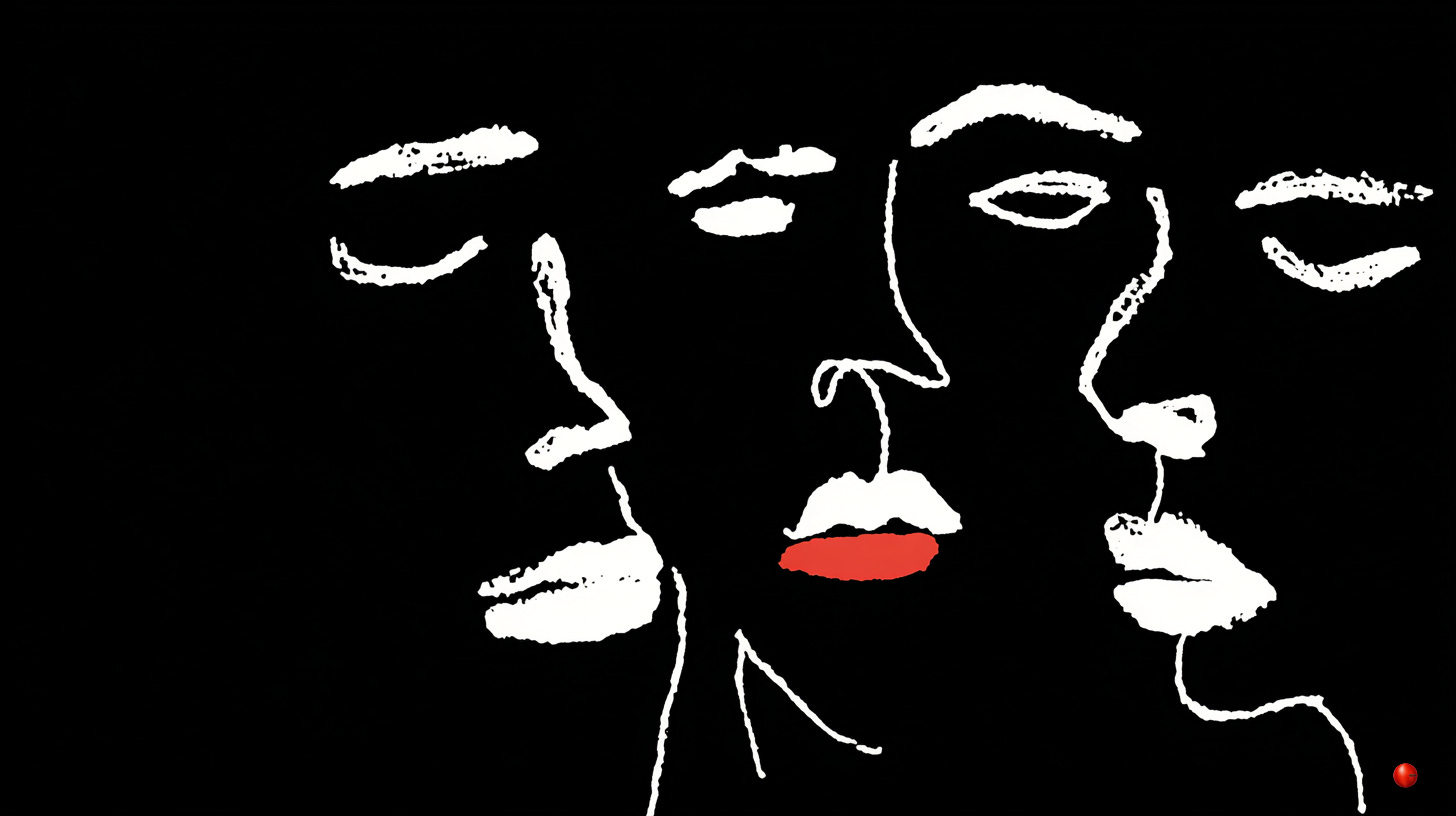
The Private Nation ‘3, Essay I — V
“We recognise that all knowledge is mediated through the body and that feeling is a profound source of information about our lives.”
— Audre Lorde

READING
Before the headlines, before the charts, before the statements from the podium, the body has already filed its report. It does not wait for confirmation. It does not ask for bipartisan consensus. It measures in breaths cut short, in pulses that will not slow, in jaws that will not unclench, in nights that refuse to turn fully into sleep. The country can afford to doubt our words. It cannot afford to doubt these readings, so it simply refuses to name them.
It is not that this country lies. It is that it rations its truths, releases them in controlled emissions like a refinery along the highway, always lit, always insisting the smell is normal. The facts are technically available. The air is technically breathable.
The harm is technically deniable.
We call these compromises. We call them optics. We call them hard choices and necessary tradeoffs and bipartisan pathways forward. We name them anything except what they are: the cost of preserving an image that can still sell itself as decent while standing inside a fog it manufactured. This is an essay about what leaks when a nation refuses to speak plainly. Not the slogans. Not the headlines.
The residue in the lungs of everyone who has to keep living in the haze.

By the time 8 million bodies hit the street, the country had already decided to call it a show of passion and move on.
The language on television stayed calm. Historic, they said, unprecedented, they said it the way a doctor says interesting when your chart does something they did not expect.
Our bodies did not say historic. They said inhale. They said choose your shoes like you might be standing for hours, eat something with salt in it so you do not pass out between the courthouse and the freeway overpass. The march had a name, No Kings, all teeth and principle, but the instructions in the group chat sounded like triage, water, masks, emergency contacts written on the inside of the arm in ink that would not run.
At the corner where the buses stopped and the streets narrowed, chests did a thing they have learned to do at scale. They widened and braced at the same time. There is a kind of breath you only take when you are inside millions of other people’s exhale, when the chant rolls forward like weather and the sound lives more in the sternum than in the ear. The headlines would later count bodies; nervous systems were already counting exits.
From above, it will look like a sea of signs and coordinated outrage.
From inside the ribs, it feels like standing in the middle of a country clearing its throat and being told, again, that this is not quite the time to speak plainly.
They will tally millions and call it a message. Our calves will carry the ache of those miles for days, and no one will name that as policy.
There is a story they like to tell about protests, that they are proof the system is working, that the right to assemble is sacred, that this is democracy breathing.
On paper, maybe. In the body, it registers differently, as a controlled burn, as a scheduled release of pressure so the pipes do not burst, as an allowed exhale that changes almost nothing about what the air is made of the next morning.
The next morning, no one at work said 8 million.
Someone mentioned traffic. Someone mentioned the singer who showed up in Minnesota, shook their head and said it was wild, like they were talking about weather. Our phones still had videos open of streets packed tight enough to shift the ground when people moved. Our legs felt like we had climbed out of a different country entirely and walked into this office by mistake.
The body did not clock in clean. Calves hummed with leftover miles. The throat carried the ghost of a chant it was no longer allowed to finish. The ears kept listening for helicopters that were no longer there, replacing them with the low whir of the copy machine which, somehow, landed in the same part of the spine. The calendar said Monday. The nervous system said something happened and nothing changed.
The email tone dings and the heart startles like a flashbang went off down the block. The manager asks for a quick pivot on a project, and somewhere behind the sternum the word pivot lands where the word concessions landed in yesterday’s news, in the same place the president’s silence is still sitting, heavy and unfinished.
We are supposed to call this stress, to call it a busy week.
At lunch, someone pulls up a clip of the No Kings crowd on their phone and narrates it like a sports replay, look at that, look how many, imagine if protests actually worked. The body does not find this funny. The jaw adjusts by a millimeter. The shoulders tilt forward a fraction of an inch. On the surface, we are nodding along, letting the conversation move on. Underneath, the nervous system is filing away a quiet verdict, not about the march, but about how alone we are allowed to feel in a room full of people who live in the same country we do.
By three in the afternoon, the ache has settled into something familiar.
Not outrage, not despair. A kind of low-grade national tinnitus, a ringing in the background of every task. We send the email. We join the call. We say, of course, happy to jump on that, in a voice that sounds almost normal.
The body, however, is keeping two ledgers, one for the work we are being paid to do, and one for the cost of pretending that yesterday was a spectacle instead of a warning.The kitchen table is where the country speaks the plainest and still refuses to say what it is doing. The envelopes do not arrive with slogans. They arrive with due dates.
We sit with the laptop open and the banking app glowing like a soft medical scan. The numbers are not catastrophic. They are not comforting. They live in that narrow band the news keeps calling manageable, which is another way of saying do not ask what it costs your body to live here. Rent, card, utilities, the automatic withdrawal we forgot about until it posted, each one another quiet sentence in a language someone somewhere designed and never had to read with their own heart rate rising.
There is a way the chest tightens that has nothing to do with drama.
It is small and precise. A breath that stops halfway down. A shoulder that lifts by a centimeter and stays there. The app says available balance. The nervous system hears you are allowed to breathe this much and no more.
The country will not say out loud that it runs on the difference between what things actually cost and what people can admit to feeling about that cost. It will not say out loud that the interest rate is also a blood pressure reading. So the emanations come through other channels, a grocery list edited in real time at the screen, a prescription put off one more week, a text drafted to a friend and then deleted because we do not want to sound like we are drowning again.
We tell ourselves stories to make the numbers feel less predatory.
We call it budgeting. We call it discipline. We say we are being responsible.
The body listens to these sentences and files them under survival. The jaw works a little harder on the inside of the cheek. Sleep comes later.
The country never has to admit that what it calls personal finance is, in practice, a national experiment in controlled anxiety conducted at millions of kitchen tables every night.
At a certain point, we close the laptop. Not because anything is resolved.
Because the body has reached the limit of how much abstraction it can metabolize in a sitting. The bills remain on the table like weather. The air in the room feels a degree heavier than it did an hour ago. The country will tally this as consumer confidence or household debt or labor force participation.
The body will remember it as a night when the heart had to learn, once again, how to beat around a number.
Eventually, the decision is not really a decision.
The numbers on the screen tilt the evening in one direction, and the body follows. There is a ride to pick up, a shift to cover, a cousin who needs help moving, a child to watch so someone else in the family can go make a little more. Call it a side hustle if you want. The body reads it as another translation of the same unpaid sentence.
Out on the road, or in someone else’s living room, or behind a counter under fluorescent lights, the emanations of policy arrive as tasks. Take this delivery ten miles for four dollars. Stay two hours longer because someone called out sick.
Say yes to one more client even though our lower back has been complaining for weeks. The spine understands the contract long before the app spells it out.
We feel it. The knees take the stairs a little slower. The eyes blur at the end of a late drive. The hands on the steering wheel cramp from gripping too long in traffic that exists partly because everyone else is hustling too. Chronic financial strain has been tied to broken sleep, higher blood pressure, a weakened immune system, a body stuck in alert even when nothing obvious is attacking it.
The country calls this flexibility, calls it entrepreneurial, calls it freedom.
On paper, this looks like participation. Labor force engagement. Resilience.
In the body, it feels like carrying a quiet emergency that never gets to end.
The heart does not care that this is considered innovative. It only knows that it has been beating in a higher gear for years.
By the time we make it back home and set the keys on the table next to the same stack of bills, there is a specific tiredness that has nothing to do with how many hours were worked. It is the exhaustion of being the buffer between a country’s refusal to name what it is taking and the body that has to absorb the difference. We call it making ends meet. The body calls it something closer to erosion.
I have handed that erosion back to myself as character, as work ethic, as adulthood.
By the time we get an appointment, the body has already done a month of waiting.
In this country, it is normal to wait weeks for a primary care visit, often more than a month, long enough that two in five people say the delay itself felt unreasonable and many decide not to see anyone at all. The calendar calls this scheduling. The body calls it holding.
The clinic air is controlled and stale. We arrive fifteen minutes early because the text reminders told us to, then sit an hour past our time. The heart rate has time to go up and settle and go up again. Every time the door opens and a name is called that is not ours, there is a small spike in something the intake forms never ask about.
When the nurse finally takes the blood pressure, she does not need to ask if we were waiting long. The cuff knows. The numbers climb a little higher than they might have in a system where access did not feel like a lottery. We get weighed, measured, asked how much we drink, how much we move, whether we are managing our stress. The country has built an entire language for individual responsibility, yet almost no language for the way structural delays live as inflammation in a real person’s veins.
At the front desk, there is the co-pay. If we have insurance, the card comes out with practiced reluctance. Premiums and deductibles have been rising faster than wages for years, and in the ACA marketplaces, average premiums are jumping by more than 20% from one year to the next, with some people seeing their expected payments more than double when subsidies shift. If we do not have insurance, the number the receptionist says might as well be another blood pressure reading.
Either way, the body feels the cost before the bank does.
The doctor adjusts a prescription, orders labs, prints a handful of instructions that will have to fit themselves around someone’s already exhausted schedule. National drug spending is projected to climb another nine to eleven percent in a single year, driven by higher prices and more expensive treatments. The country calls this innovation. The pharmacy will call it today’s total.
At the pharmacy counter, the real conversation begins, and it has almost nothing to do with health. The tech rings it up, then pauses. The price is higher than last month. Maybe a coupon expired. Maybe the deductible reset. Maybe the plan quietly reclassified the drug. Some of the most commonly used Medicare Part D drugs have nearly doubled in price over an 11-year period, and brand-name drug prices keep rising faster than inflation. The person on our side of the counter hears only the final number.
The receipt prints anyway.
There is a particular silence that falls between the tech naming the cost and our mouth saying whether we will take it. It is not indecision. It is a quick inventory of the week ahead, the rent, the groceries, the gas, the other bills on the table, the protest we walked in last weekend, the shift we picked up to pay for this very moment. Sometimes we say yes and pay, and something else in the budget quietly dies. Sometimes we say we will come back. The pharmacist nods with a face that has seen too many people choose between their lungs and their light bill.
On paper, the country will record all of this as utilization, premiums, cost growth, adherence rates. We will carry it as a lingering ache in the jaw, a higher resting heart rate, a night of sleep broken by numbers we cannot unsee. The nation cannot afford to say plainly that it is using time, fear, and price as instruments of control in primary care, so the truth leaks out where it always does, in the places where our bodies keep failing to pretend this is normal.
There is a part of the body that still believes what the country says about itself. Hope is not an idea first.
It is a reflex.
It hears words like progress, recovery, reform, relief, and something in the chest leans forward before the mind has time to remember the last headline that used the same vocabulary and left the same bruise.
Hope does not die cleanly. It keeps showing up to the screen like a dog that has not yet learned what the raised hand means. It flinches and approaches at the same time. It hears that 8 million marched and thinks maybe, hears that primary care access is a priority and thinks maybe, hears that prescription costs are finally being addressed and thinks maybe. The body prepares itself to be relieved.
So we live with a double exposure.
One layer is the country talking about itself, measured and optimistic and allergic to plain speech. The other is the body, flinching, leaning in, flinching again, recording the same years as a series of micro-concussions to hope.
When the relief does not arrive in the way the language suggested, the country does not call that harm. It calls it politics. It calls it process. It calls it complicated. The distance between those words and the lived sensation of one more unkept promise is where a different kind of emanation forms, not smoke, not gas, but a faint bitterness that settles in the tissues that used to carry anticipation.
Some nights, we turn the news off mid-sentence, not because we no longer care, but because the body cannot afford another small whiplash between what is being said and what is being felt. Other nights, we watch to the end, let the anchors close with their familiar sign-offs, and sit in the quiet afterward, noticing that hope is still there, thin and stubborn, but no longer willing to stand unprotected in front of the country’s metaphors.
The nation cannot afford to say plainly how much it has asked hope to endure.
So hope learns to live differently, lower in the body, less in the ears and more in the hands, more in who we show up for than what we are told to expect.
The emanations do not stop. The language does not become honest overnight.
What changes is where we let those words land, and how much of our remaining belief we are willing to let them touch.
Night is supposed to be when the emanations quiet.
They do not. They change shape.
We lie down and the body does what it was trained to do long before there were smartphones or push alerts. It reviews the day for threats.
It checks the doors, real and imagined. It replays the march, the kitchen table, the gig, the clinic, the counter. Sleep research keeps linking chronic financial strain and unstable work to fragmented sleep, shorter sleep, more nights of lying awake, more exhaustion the next morning. Experts say this as if naming the correlation could soften the cause.
What we know in the body is simpler. The mind wants to rest and cannot convince the heart that it is safe to slow. The chest holds on to a little extra air like it might be needed. The shoulders never fully drop. Somewhere in the small muscles of the face, there is a tiny clench that does not release until long after the alarm goes off. The country calls this burnout, stress, anxiety, sometimes even resilience.
Mindfulness is prescribed to people whose lives have been designed to keep them alert.
Studies note that gig workers and those with volatile income often report worse mental health, higher rates of depression and anxiety, and more physical complaints than those with stable jobs. No one with the power to redesign the conditions seems eager to lose the benefits of this always-ready labor.
In the dark, without the news or the bills in front of us, the emanations are finally audible as what they are.
Not individual failures. Not private worries. Signals from a country that has built a whole economy on never letting certain people’s bodies relax. The insomnia is a policy outcome. The racing thoughts are infrastructure.
Eventually, sleep comes the way everything else has been coming lately, in fragments. We dream of alarms. We dream of lines. We dream of trying to explain to someone in authority that something is wrong and hearing them repeat the same phrases we have been hearing for years about opportunity, sacrifice, moving forward, staying strong.
The body wakes before the sentence is finished.
By now, the pattern is not subtle.
The country speaks one way, our bodies answer another. Policy, protest, paycheck, clinic, counter, screen, night. Each domain has its own vocabulary, its own experts, its own dashboards and hearings and town halls.
The nervous system does not care about these distinctions.
It registers only pressure and release, threat and reprieve, accumulation and break.
If this were a different kind of essay, this is where we would pivot into instructions. We would offer steps. We would smooth the edges. We would pretend there is a way to live in this body without it keeping score.
It has been trying to name the way a nation’s refusal to speak plainly about what it is doing becomes, over time, a refusal to let certain people’s bodies live at rest. You cannot ration truth without rationing ease. You cannot outsource cost without outsourcing panic.
You cannot build an economy on managed uncertainty and then act surprised when whole populations develop what looks, from a distance, like distrust.
Up close, it is not distrust. It is a proportional response. It is a heart that has learned to wait for the other sentence. It is a jaw that has learned to tighten at certain words. It is a body that has learned to believe its own readings more than the statements that follow every crisis with we are committed, we are working, we are confident, we will get through this together.
There is still a kind of hope in that. Not the hope the country keeps trying to sell back to us, branded and timed with election cycles. A quieter hope that lives in the decision to keep listening to the body even when the body is tired of being right. To treat our own reactions as data, not defects. To let the ache after the march, the breath in the waiting room, the pause at the counter, the sleeplessness, all of it, count as evidence.
The emanations are not going to stop just because we have learned to call them by their names. The refinery does not shut down because someone points at the smoke. But there is a difference between living inside a fog we have been told is weather and living inside a fog we know was turned on.
The first demands gratitude. The second makes room for something else, something closer to an honest refusal.
We are not owed a neat ending.
What we are owed, and almost never given, is plain speech about what our bodies already know.
Until the country can afford that, the work of attention will keep falling to us, one chest, one jaw, one restless night at a time.
Let that be enough—for now.

Author’s Note
Writing this did not make my body any calmer.
If anything, it made the readings louder.
I set out to describe what the country will not say plainly and found myself cataloguing sensations I had been training myself to ignore. The shortened breaths I had been calling personality. The jaw ache I had been calling clenching. The insomnia I had been calling a bad week. Putting them in the same frame as marches, premiums, copays, and headlines did not resolve them. It only made the penumbra more legible.
Staying in the composite I was not a craft trick.
It was a concession to how many of us are living some version of this same body. Gigging in different cities, waiting in different clinics, watching different local news, but carrying eerily similar tensions in our shoulders when the country speaks. There are details here that are mine, but the posture is not private.
What changed, for me, was not my assessment of the nation.
That has been straining for a long time. What shifted was my sense of what counts as evidence. I have spent years trusting charts and articles and official statements more than the pulse in my own neck. This essay insisted on reversing that order. It asked me to treat my body, and the bodies I am in community with, as primary documents.
I do not know yet if that is healing or simply accurate. I do know that I will not be able to watch another protest recap, or open another bill, or sit in another waiting room, without hearing the language of emanations in the background.
Not as metaphor. As diagnosis.
If there is any aftermath worth naming, it is this:
I no longer believe the country when it calls my reactions extreme. I believe my nervous system when it calls them proportional.
If this work matters to you, join the readers who keep it possible.
Subscribe to access the full UNSPUN archive.
THE PRIVATE NATION is where UNSPUN follows public violence into private rooms—the stories we tell ourselves after the headline scrolls away, the ways a country takes up residence in a single nervous system. It treats interior life as evidence, not escape.
My commitment to myself and to you is that this work is, and will remain, independent of corporate and party money; it answers to the people willing to read it closely enough to be changed. If this piece shifted your footing, that shift has a cost on this side of the screen: time, refusal, and the choice to keep writing as if clarity still matters more than access.
If you are able, a paid subscription or recurring contribution keeps this work answerable to its readers instead of to its silencers. If you are not in a position to support UNSPUN, your willingness to stay with work like this already counts.
THE PRIVATE NATION continues for those willing to stay with the work as it unfolds.

Next in the serial
Essay II — Forecast: Conditional
The Private Nation ‘3
You’ve articulated this powerfully. The body always knows.