

extrait de parfum
not eau de parfum


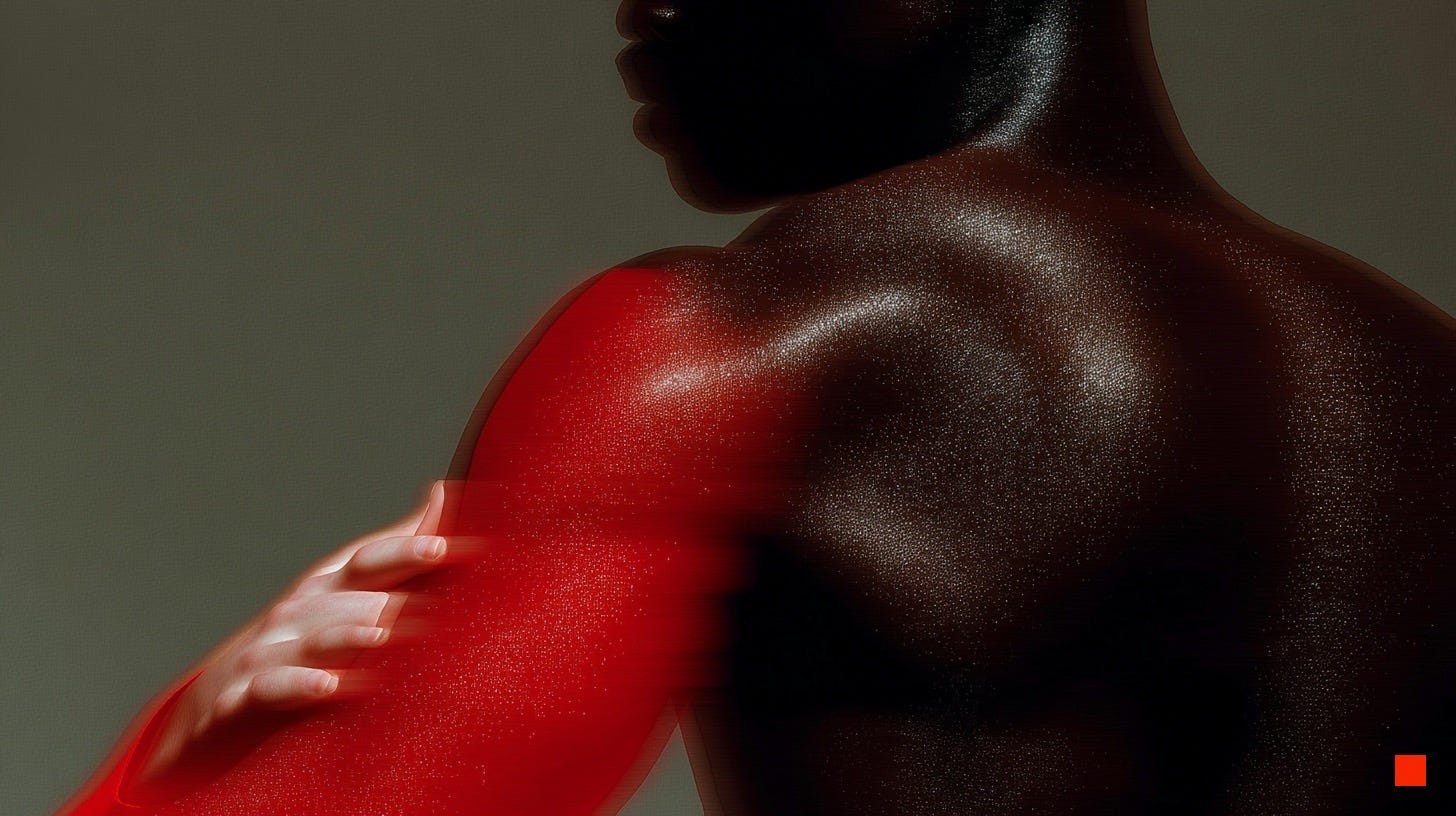
“Illness is not a metaphor, and the most truthful way of regarding illness—and the healthiest way of being ill—is one most purified of, most resistant to, metaphoric thinking.”
— Susan Sontag, Illness as Metaphor
They all wore the same fragrance. Not similar. The same.
I learned to recognize it before I learned to ask their names. Before I learned what they wanted. Before I understood that what they wanted and what I wanted might be the same thing for different reasons.
The scent arrived first. Always. Amber, something warm, something that smelled like money looks.
Later I learned it was called Baccarat Rouge 540.
Later I learned extrait, not eau de parfum. Later I learned the difference mattered.
They wore it like they wore their watches. Casual. Expensive. Identical. Walk into the restaurant, the hotel bar, the apartment with the doorman who already knew not to ask my name, and that scent would already be in the room. Waiting.
I still smell them.
Not the memory of them. The actual scent. On my skin after. In my clothes. On my pillowcase three days later. The fragrance transferred.
That’s what it does. It marks.

The first time was summer.
His apartment faced south. Light everywhere. I remember the heat before I remember his face. The way the room held temperature even after the sun moved. How my skin felt wet before he touched me.
He kissed my neck. Left side, just below the jaw. The scent transferred immediately. I didn’t know that’s what was happening. I thought I was smelling him. I was. But I was also becoming him. Wearing what he wore. Marked.
Shower after. Two rounds of soap. The scent stayed.
The second time was fall. Different man, different apartment. North-facing this time. Cooler. But the same warmth when he leaned close. The same amber-something that made the air feel thick before anything else did.
He touched my face first. Traced my cheekbone with his thumb. His hand smelled like the room smelled like what I would smell like after. I didn’t name it yet. Didn’t understand I was learning a pattern.
Shower after. Longer this time.
Hot water until the mirror fogged. Still there. Softer maybe, but there.
The third time I recognized it before he touched me. Crossing the room toward me and I already knew. My body knew. Amber, cedar, something expensive I still couldn’t name but could anticipate. Could want.
He kissed differently than the others. Slower. More deliberate. But the scent was identical. Not similar. The same bottle. The same concentration. The same system of marking.
Documentation maybe. Proof I’d been there.
Winter came. Different men. Same fragrance. I started counting. Not the encounters. The showers after. How many times I washed my hair. How long before I stopped smelling them and started smelling like them. The distinction collapsed somewhere around the fifth or sixth time.
I’d put on my jacket to leave and catch it on the collar. Walk home and smell it on my scarf. Get into my own bed, my own sheets, and still. There. Clinging. Transferring. Persisting.
Started to recognize it in public.
The restaurant. The museum. Wind that hit me the same time shoulders bumped, traveling opposite but never tethered too far. Turned my head because I thought I saw someone I’d been with, but it was just another man wearing the same fragrance. Another man who’d learned that wealth smells identical when you’re purchasing the right things.
Spring. The appointments closer together. Different apartments, different neighborhoods, different men who somehow all made the same choice about how to smell when they touched someone like me.
They were kind, mostly. Asked questions. Made sure I’d eaten. Offered water after. But they all wore the same amber-cedar-something that stayed on my skin longer than their kindness did. The scent outlasted their interest. Outlasted their texts. Outlasted whatever they told themselves they felt when they asked me to come over.
Summer again. Full circle. The cycle repeating. Except now I could name it. Baccarat Rouge 540. Looked it up finally. Read the notes: jasmine, saffron, cedarwood, ambergris. Read the reviews: luxurious, long-lasting, unforgettable. Read the price: confirmation it belonged to the tax bracket I’d been visiting.
Extrait de parfum, not eau de parfum.
I didn’t know what that meant yet. But I knew it cost more. Knew it lasted longer. Knew that when they wore it and touched me, I became evidence of something I couldn’t quite name but could definitely smell.
And then there were times shower didn’t follow. Times I let it sink deeper, clog my glands. A chemical reaction of sorts. At times it carried more belonging than the other gestures did.
Extrait de parfum contains more fragrance concentration than eau de parfum. The difference determines how long the scent lasts, how deeply it bonds to skin, how much transfers through contact.
Perfume is alcohol, water, and aromatic compounds. The higher the concentration of aromatic compounds, the longer the scent persists. Extrait has the highest concentration. It’s designed not to fade.
On fabric: hour 8 feels like morning after. Hour 12 is when you realize it won’t wash out easily.
On skin: hour 12 is lunch the next day, catching it on your wrist when you lift your fork. Hour 24 is full days later, still there. Depending on how warm your body runs. Depending on how much you sweat.
On warm skin: longer.
On sweating skin: longer still.
Heat activates fragrance molecules. They bind to sebaceous glands, the ones that produce oil. The scent doesn’t just sit on the surface. It absorbs. Becomes part of what your body secretes.
Baccarat Rouge 540 contains jasmine, saffron, cedarwood, and something called ambergris accord. Ambergris is a substance produced in the digestive system of sperm whales. Historically, it was harvested from whale intestines or found floating in the ocean after the whale expelled it. Now it’s often synthesized in laboratories. But the name remains. Ambergris. From the whale’s body to yours.
The fragrance costs more because it’s extrait. Because it lasts. Because when someone wearing it touches you, you don’t just smell them. You become them. The molecules transfer. Your skin absorbs what their skin wore.
This is not metaphor. This is chemistry.
The sebaceous glands in your neck, your wrists, behind your ears, these are the warmest parts of your body. The places where fragrance bonds most completely. The places they touched most often.
I learned the word sillage. It means the trail of scent a person leaves behind when they walk through a room. Their presence lingers after they’ve gone. Extrait has strong sillage. You smell it before you see them. You smell it after they leave. You smell it on yourself days later because their sillage became your sillage. You carry their trail now.
Other things concentrate in bodies.
Not just fragrance. Not just what transfers through touch or absorbs into glands or lingers on fabric for hour 12, hour 24, full days later. Other measurements. Other persistence.
Viral load is measured in copies per milliliter of blood. The higher the concentration, the more the virus has replicated. The more it has made your body its production site. HIV concentrations can range from undetectable to very high, depending on treatment, depending on time since infection, depending on how warm your body runs. Depending on how much you sweat.
There is no eau de parfum version of a virus.
No diluted option. No choice between 15–20% concentration and 20–40%. It replicates at the rate it replicates. It bonds not to sebaceous glands but to CD4 cells. White blood cells. The ones your body uses to fight infection.
The virus doesn’t just sit on the surface. It absorbs.
Becomes part of what your body produces.
This is not metaphor. This is biology.
I learned the term viral reservoir. Even when treatment suppresses the virus to undetectable levels in the blood, it hides in certain cells. Resting. Waiting. Concentrated in places treatment can’t always reach. You carry the reservoir now. You carry the potential for replication even when the copies per milliliter read zero.
The trail doesn’t fade. The sillage stays.
They touched me and left their scent. Something else touched me and left its concentration. Both designed to last. Both measuring persistence in time: hour 12, hour 24, full days later, full years later. Both requiring disclosure under certain circumstances. Both changing what it means when someone reaches for your neck, your wrist, the warm places where things absorb most completely.
I had to tell them first. Undetectable, I’d say. On treatment. The numbers memorized.
They had numbers too. Different kind. The fragrance. The prescription. The portfolio. The kind of mathematics that happens in boardrooms where risk is always someone else’s body. Where calculation replaces feeling. Where every variable can be controlled if you have enough coverage, enough access, enough money to insulate proximity from consequence.
Sometimes the information made them pause. Not out of fear. Out of recalibration. I could see it. The mental adjustment. The risk assessment running behind their eyes like they were reviewing quarterly projections. Then the decision: proceed.
And something shifted. Not in their posture. In the room’s temperature. In how close they stood. The kind of heat that starts where sweat starts. Side of my neck first. Traced to the softness of my lips. Down below my waist where things don’t just heat up, they ignite.
Risk becomes real in sweat. In the places where their fragrance transferred because my skin was wet. Because heat activates. Because the body doesn’t calculate, it responds. Their paranoia evaporated the moment contact began. Wealth protects from consequence but it can’t protect from wanting. From reaching. From the transfer of power that happens when their extrait becomes my evidence and their controlled risk becomes my marked skin.
They knew their lane. Knew the fragrance would transfer. Knew what wouldn’t if the numbers held. But bodies don’t honor boardroom logic. Sweat doesn’t read coverage policies.
After the seventh encounter, maybe the ninth, I bought my own extrait.
Not theirs. Not Baccarat Rouge 540 with its amber-wealth-sameness. Something else. Byredo Casablanca Lily, a bottle from the same tax bracket, but chosen by me. Still expensive. Still concentrated. Still designed not to fade. But lighter somehow. More breathable. Doesn’t clog my pores the way their fragrance did when it transferred and absorbed and stayed.
The fragrance has a partner now. I’ve opened our relationship for a third.
Three concentrations living in one body. The virus that won’t dilute. Their scent that transferred and marked me as proof of contact. And now this. My choice. My extrait. My trail.
When I wear it, I’m not erasing them. I’m layering. Adding my own sillage to what they left behind. Claiming the right to mark myself with something that lasts just as long but smells like I chose it. Like I could afford concentration too. Like persistence isn’t only theirs to bestow.
I still smell them.
Not every day. Not constantly. But enough. Catch it on a jacket I forgot I wore. On a pillowcase that survived too many washes. In public sometimes, on someone else, and my body remembers what my mind tried to file away.
The scent transfers. That’s what extrait does. It marks. It lasts. Hour 12, hour 24, full days later when you thought you’d washed it all away but your glands held onto what absorbed.
I carry three forms of evidence now. Three concentrations that won’t dilute regardless of treatment, regardless of how many times I layer Casablanca Lily over Baccarat Rouge, regardless of how the numbers shift or hold or document safety.
They wore fragrance priced to signal they could. I wear fragrance that signals I can now too. Because concentration matters when you want to leave your own trail instead of only carrying theirs. Because extrait is extrait whether it costs more or arrives on your skin for free because it transferred without asking first.
The difference is I chose mine. Chose the lighter one. The one that doesn’t clog. The one that smells like mystery and nocturnal beauty instead of boardroom amber and calculated risk. Chose to layer my persistence over theirs. Chose to mark myself with something that lasts just as long but breathes.
They left. The fragrance stayed. Other things stayed too.
This is not about desire or submission or even the particular choreography of wealth meeting willing bodies. This is about what it costs to be marked by what won’t wash off. What concentrates. What persists. What measures time in copies per milliliter and hours on skin and the distance between disclosure and contact.
Some concentrations fade. Casablanca Lily will eventually. Baccarat Rouge 540 will eventually. Weeks later maybe, if I stop layering one over the other. If I wash the jacket enough times. If I replace the pillowcase.
One concentration doesn’t fade.
Some transfers are permanent regardless of whose numbers were lower or whose coverage was better or who walked away smelling like luxury while the other walked away smelling like proof.
I still smell them. Baccarat Rouge 540, extrait de parfum, the version designed not to fade.
And I smell myself now too. Casablanca Lily, extrait de parfum, the version I chose to layer over what they left.
And I carry what doesn’t layer. What can’t be covered with a different fragrance or a lighter concentration or choosing my own trail. What measures persistence in time that stretches longer than both perfumes combined.
They touched me wearing extrait. I disclosed carrying extrait. I bought my own extrait.
Three marking systems. Two fade. One doesn’t.
The difference is two of them I had some say in.
Let that be enough—for now.
AUTHOR’S NOTE
Writing this required more disclosure than the encounters did.
I told those men my status in private rooms before anything happened. Controlled variable. Required script. The information stayed between bodies.
This essay discloses the same information to everyone. No script. No privacy. No control over who knows what about my body now or what they do with that knowledge after reading.
I’d been running low on Casablanca Lily when I finished writing this. Needed a refill. Ordered another bottle. About three months of staying adherent. Mmmm, smells so good. The essay didn’t teach me to claim my own trail. I’d already been wearing it. Already layering my concentration over theirs. Already understood I was carrying three marking systems before I wrote a single word about it.
I counted them while writing. The men in my twenties who felt the need to leave their mark. As if they were still attached to their youth but their youth had learned dominance in ways mine hadn’t. My naivety hadn’t learned its price yet. Didn’t know ownership until it was taught. By them. By their fragrance. By their hands. By what they transferred that lasted longer than they intended or maybe exactly as long as they intended.
My parents will read this.
There was a time that thought made me anxious, knowing they’d have a bird’s-eye view into the most intimate corners of my life. Now it feels different. We’ve grown into a kind of looking that’s built on essential dialogue, on trying to understand each other, but more than anything on love.
Three concentrations. Two purchased. One contracted. All three documented here.
The essay didn’t wash off.
UNSPUN publishes longform essays, editorial encounters, and visual documents tracing the language of power as it operates in real time.
This work appears as part of UNSPUN’s ongoing inquiry into how authority circulates, how permission is granted, and how silence functions as structure rather than absence.
If something in this piece altered your footing, that alteration is intentional.
What follows does not ask for agreement. It asks for attention.
UNSPUN continues for those willing to stay with the work as it unfolds.