



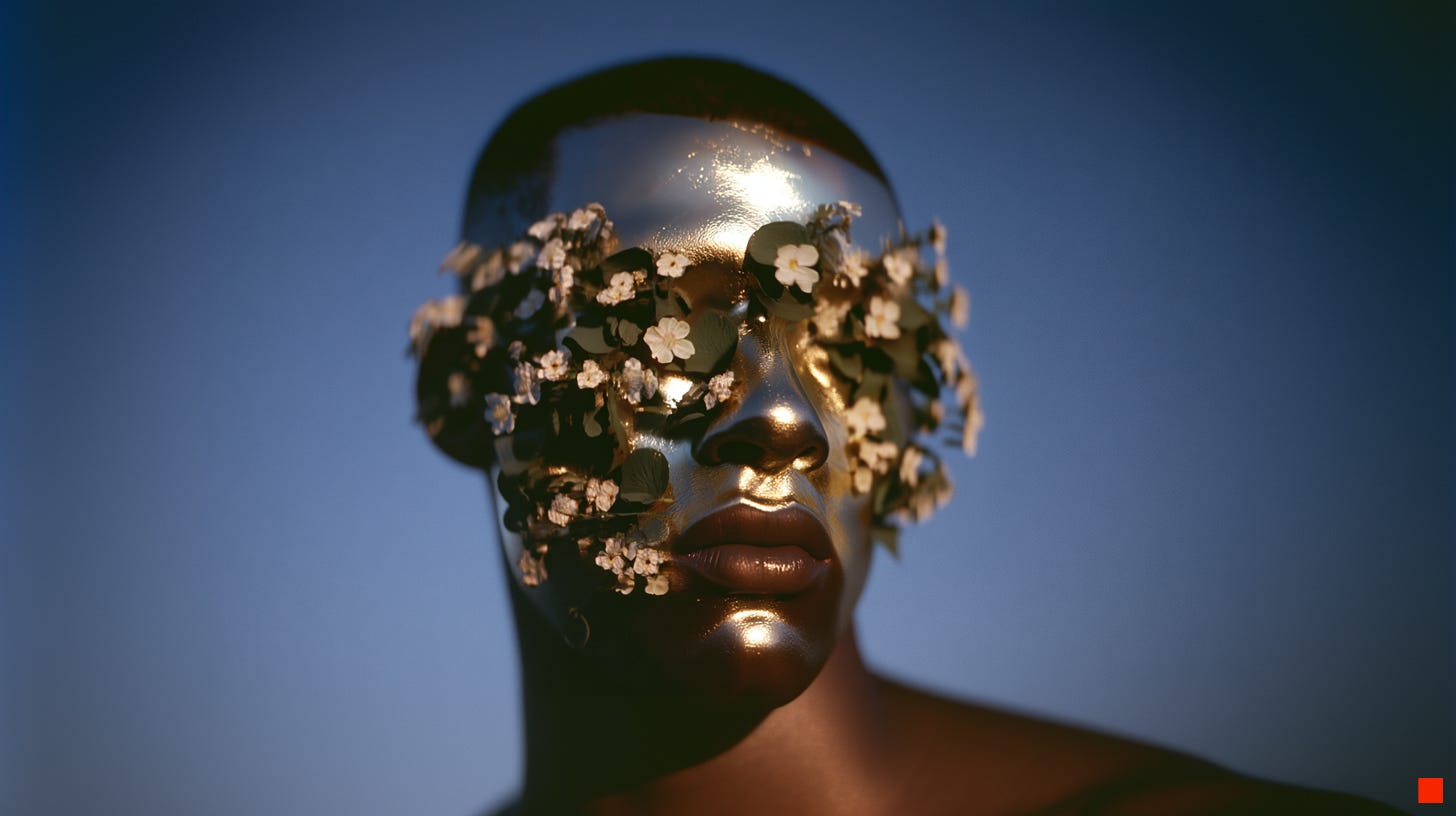
“Not all witnesses speak. Some carry.”
— Saidiya Hartman
This piece did not begin as an essay.
It began as a question asked in public, followed by the decision to stay long enough to hear the answer. Over fourteen weeks, I wrote into silence, inheritance, softness, fear, healing, visibility, and the body’s memory of survival. I wrote about being wanted in secret but not in daylight. About conditional belonging and the violence of tolerance. About learning stillness as safety and burying gentleness because desire taught negotiation with violence. About disclosure changing the temperature of rooms and watching hands stop mid-reach. Each piece ended the same way, not with certainty, but with an invitation to reflection.
What followed was not commentary. It was recognition. Stories returned altered. Language came back carrying weight I had not placed there. Some of you spoke publicly. Some of you worked the language into your lives quietly. Some of you never spoke but were altered anyway.
This essay does not resolve what surfaced. It records what happened when we stayed present with one another long enough for something real to form. The work belongs to that exchange. My responsibility was to hold it with accuracy.
If this piece asks anything, it is not agreement. It is attention careful enough to notice where listening ends and responsibility begins.

I did not expect the work to answer back, but some of you did.
Some of you named the silence you’d been carrying because you believed it was safer than speech. Kyle Leonard, when you wrote, “I loved you. I loved you the way we need gravity,” I heard the weight you were holding inside the past tense. I heard how love kept happening even when language couldn’t stay current with it. When you told me that even now there was still silence, that the words lagged behind what you felt, I understood how carefully you had learned to carry what wasn’t mirrored back.
When I told you your words belonged in the archive we were building together, I wasn’t offering validation. I was recognizing labor. Two days later, you wrote your first poem in months. I didn’t cause that. But I stood close enough not to interrupt it.
Others of you took the language and turned it structural. Gaby King, when you wrote about building rooms instead of knocking on doors that were never meant to open, I recognized the moment when permission stopped being the goal. You didn’t stay with metaphor. You made it material. Rooms, doors, ground. When you told me you had finished a book that refuses market conformity, I heard my language come back changed, carrying your decision rather than my explanation. In your classroom, the work didn’t stay theoretical. It became policy. That mattered.
One of you brought precision from elsewhere. Dr. Nicole Mirkin, when you named “relational injury,” you gave form to something I had only known somatically. You didn’t ask for story. You didn’t extract experience. You offered a framework that could travel without owning it. When I used those words days later with someone else, I felt how language can move without taking credit. That is a rare ethics.
And some of you never spoke at all.
You read quietly. You carried the questions into other rooms. You let the language sit in your body without converting it into response. I felt you in the way the sentences slowed down before landing. In the refusal to rush toward comfort. In the care taken not to simplify what would have been easier to summarize. Your silence was not absence. It was another form of witness.
Elsewhere, one of you described the work as “reverse-engineering emotional architecture.” I’d been calling it witness consciousness. Your phrasing was sharper. It named the structural analysis underneath the testimony. Another wrote, “Your writing always processes such complex emotional data, like previous pieces, and it’s profound how survival modes become new, mutated algorithms.” I carried both frameworks into the next pieces I wrote. The work was teaching me its own vocabulary by passing through your thinking first.
I remember closing my laptop after reading that and realizing my shoulders had been lifted for hours, my body still braced long after the room had gone quiet.
The poems were already written. I had survived what they documented. Between April and July of 2025, I wrote them while living inside the experiences—silence, conditional softness, learning stillness as safety, being wanted in secret. That was first witness. Private processing. Survival through language.
But the diptych structure required return. Every week for fourteen weeks, I went back into poems I thought I’d closed. I re-entered wounds to write the reflection pieces, made them present again, felt them again in order to think through them publicly. The work asked for double exposure: live it once, then re-inhabit it weekly under different conditions.
What I didn’t expect was how your presence changed that return.
The first time I wrote these experiences, I was alone. The second time—writing the essays, posting them, waiting for responses—I wasn’t. Some of you were naming your tight jaw while I was naming mine. Some of you were describing how you learned to build rooms while I was still learning how to ask for entry. Some of you were writing about embracing softness after nearly losing everything to “strong Black woman” conditioning, your words arriving the same week I published about conditional gentleness.
The re-entry stopped being solitary exposure and became something else: equal ground. Not me explaining to you, but us standing in the same territory, each carrying our own version of the pattern.
Not catharsis. Not even testimony alone.
The work was about holding the story high enough that the next person could see themselves in it and hold it higher still. It wasn’t about processing my own pain. It was about making language available so others could recognize their own.
Birgit / Mrs.Bimako wrote, “This hit somewhere I recognize without needing to explain why. Silence as inheritance. Performance as survival. Awareness that doesn’t undo danger or make the cost optional. This isn’t abstract. And you named it with a precision and honesty that takes real courage.”
The work wasn’t offering resolution. It was offering recognition. And recognition, when it arrives with precision, creates permission—not to heal, but to stop carrying weight alone.
This kind of movement leaves no metrics behind. It reveals itself through delay. Through one of you reading the piece about being held at your customer service job three weeks later, tears in your eyes while helping customers. “I gotta stop reading your articles at work,” you wrote, “cause looking at my customers with tears in my eyes ain’t the wave.” The first paragraph had named something you’d been living without language for: “I’ve spent more years than I can count with depression, but 95% of people in my life have never even known when I’ve had a sad day.”
You’d been trying to figure out for years why your jaw felt so tight, your breathing constricted. The piece didn’t solve it. It gave you permission to stop pretending the tension was normal. “Maybe what you said here isn’t actually the reason,” you wrote, “but it’s a meaning I’ve never considered before.”
What you were naming was not metaphor. Tight jaw. Shallow breath. Years of being unheard settling into muscle and memory. The body keeping score long after the mind thinks it has moved on.
By the final weeks, the work had stopped moving in one direction. Questions about silence became meditations on gravity. Reflections on composure became excavations of grief stored in the body. Healing surfaced not as relief but as exposure—the loneliness that follows growth when community was built around endurance rather than reciprocity.
After the piece on learning stillness as safety, some of you described recognizing the “violence of palatability,” how we constantly optimize ourselves for someone else’s unstated parameters. That phrase wasn’t mine. It was yours. You’d taken what I wrote about making ourselves digestible and named the structural force underneath. I’ve used your language in every conversation about assimilation since.
Phrases returned days later while washing dishes. Sentences surfaced mid-conversation that had nothing to do with writing. Kathleen Gubbins, at 61, described her younger self: “Too smart, too tall, too boyish, too socially awkward; dumb myself down, slouch, pile on the makeup, drink away the social anxiety. 61-year-old me, I want to both hug and shake that girl.”
All those quiet edits made in real time, without anyone naming the cost. Wanting to hug her and shake her at once—that’s recognition, not regret.
Clarification carries weight. Once named, certain patterns become harder to ignore. Silence stops feeling neutral. Endurance stops feeling virtuous. Strength stops feeling clean. Language alters the terms of self-understanding, and with that alteration comes responsibility—not only toward others, but toward oneself.
Your responses revealed three distinct proximities, each carrying different stakes.
Some of you approached from lived experience. Your bodies already knew what I was describing. The tight jaw. Carolyn’s friend, Thane Campbell lost to HIV-related cancer. The disclosure that changed the temperature of the room. For you, the work didn’t introduce new information. It gave permission to stop carrying it alone.
Others approached from partial proximity. They described watching friends die during the AIDS crisis while fear and ignorance shaped public response. They noted how labels like “food desert” or “red zone” both illuminate and wound. They didn’t collapse difference into empathy. They offered precision without claiming fluency. They asked questions. Whose silence have I praised as discipline? Whose composure have I confused for peace? They stayed present without speaking over, let understanding form slowly, allowed resonance to sharpen responsibility rather than flatten difference.
And some of you approached from genuine distance. You’d never experienced these specific patterns but recognized yourselves in the mechanisms being described. You didn’t center your resonance. You didn’t turn someone else’s pain into your own teaching moment. You listened. Sat with discomfort without rushing to name it. Let recognition settle before turning it into explanation. Your silence wasn’t absence. It was another form of witness.
That restraint mattered. It shaped the tone of the exchange. It prevented the work from becoming a performance of empathy and made it a practice of attention instead.
Some of you never commented but remained unmistakably present. I felt you in the way the language hesitated before landing. In the care taken not to oversimplify. In the refusal to rush toward comfort. You stayed with the questions privately, carried them elsewhere, recognized yourselves without needing acknowledgment.
By the final weeks, something had formed. You were not just reading. You were moving differently. Building rooms. Writing poems. Mapping emotional algorithms in your own lives. Realizing your jaw had been tight for years and finally understanding why.
What formed here was not consensus. It was proximity. A willingness to remain in the room without demanding that difference collapse into sameness. You did not come to be reassured. You came to be accurate. You allowed contradiction to stand. You resisted the urge to turn pain into lesson or closure.
This is where the ethical pressure of the work settled—as orientation, not conclusion.
If you live inside these experiences, your body already understands this. You know the cost of being read through stories that predate you. You know how quickly a room can shift. You know the labor of managing other people’s fear in your own body. You know what it means to be asked for proof of safety you never owed. The work named what you’ve been carrying. What happens next is how you choose to carry it differently.
If you stand adjacent, the work asks restraint. Not distance but care. The discipline of resonance without possession. The willingness to let recognition sharpen responsibility rather than flatten difference. To offer tools without extracting testimony. To stay in your lane while extending what expertise you have.
And if you stand outside, the invitation is not empathy but alteration. To allow what you’ve heard to cost you something. To notice which silences have protected your comfort. To question which disappearances have made rooms feel orderly. Understanding that leaves the world unchanged is not understanding yet.
I walked away from traditional publication for Inheritance. The structural changes they requested felt inauthentic. They were also interested in Every Word I Never Spoke Aloud once it was complete. Walking away from that deal meant keeping both projects independent—smaller circulation, but on my own terms.
That choice made this kind of exchange possible. Fourteen weeks. Invitations, not explanations. Language moving between people who chose to be here rather than audiences who stumbled upon it. The work stayed precise because it didn’t have to be palatable. It stayed honest because it didn’t need to scale.
Did this change anything structural? No. It didn’t dismantle systems. It didn’t redistribute power. It didn’t even reach most of the people who might need it.
But it did something smaller and more durable. It created equal ground where hierarchy usually stands. For fourteen weeks, we practiced something together. Witness without extraction. Recognition without possession. Presence without performance.
I don’t know if that scales. I’m not sure it should.
What happened here was not safety. Safety suggests permanence. What happened here was care, practiced under conditions that remained uneven. Not everyone entered the room with the same protections. Not everyone could leave unchanged. Acknowledging that disparity does not undermine the work. It clarifies it.
The language has already passed between us. It has already settled into muscle and memory.
Some of you still read the pieces at work and end up with tears while ringing up groceries. Some of you build rooms that don’t ask permission. Some of you map your own emotional algorithms. Some of you want to both hug and shake your younger selves. Some of you delete the screenshots—or don’t—and both choices mean something now.
The work isn’t being remembered. It’s being used. Altered. Applied. Living in bodies and decisions and the next thing each of you writes or builds or refuses.
I didn’t ask you to carry it forward. You chose to.
What happens next does not belong on the page. It belongs in the rooms you enter after this, in the decisions you make when no one is watching, in how you choose to stand once you understand what your standing costs.
Let that be enough—for now.
Author’s Note
What surprised me most was not being seen, but being held.
This work moved in real time. It breathed. It answered back. Staying close to it—choosing to publish independently, choosing proximity over distance—allowed me to witness something I could not have anticipated: language meeting people where they already were, and people meeting one another without needing permission or proof. I was holding others as much as they were holding me. That reciprocity changed the temperature of the work. It changed me.
Closing Inheritance and Every Word I Never Spoke Aloud this way feels right. Not because everything has been said, but because something has been shared fully enough to stand on its own. What mattered was not arrival, but visibility—recognizing that we have been moving in parallel all along, and allowing that to be seen without apology.
As we step into 2026, I carry this knowing with me: none of us has been alone in the movement. And for those who come after, I hope this work makes space—not as instruction, but as invitation—to enter visibility, to strengthen there, and to bloom.
UNSPUN publishes longform essays, op-eds, and visual documents tracing the language of power in real time.
This piece appears in Every Word I Never Spoke Aloud, the serial devoted to interiority, survival, and the politics of silence—where the unsaid becomes record, and the private self finally speaks aloud.
To engage or contribute, write to taylorallynofficial@gmail.com, or follow UNSPUN for new releases and ongoing dialogues.

Every word here is researched, written, and sharpened by one person—me. If you value work that names what others won’t, consider becoming a paid subscriber. It keeps this space independent, and it keeps pieces like this possible.
I can't fully describe the feeling of being named in this. The depth of my gratitude is matched only by the joy I feel watching your growth here and the tears that burn hot in my eyes every time you speak to me without knowing you are speaking. There are few things in 2025 that I am even as thankful for as the gift of finding you. Thank you for every word you have written, and the way those words have opened me.
This articulates something I’ve been feeling but hadn’t yet named — that the work doesn’t end on the page because it was never meant to.
The idea of language being used rather than remembered feels exactly right: altered by bodies, decisions, refusals. What you write here about standing, cost, and visibility lands deeply.
Thank you for holding the work — and the people around it — with this kind of seriousness and care.