



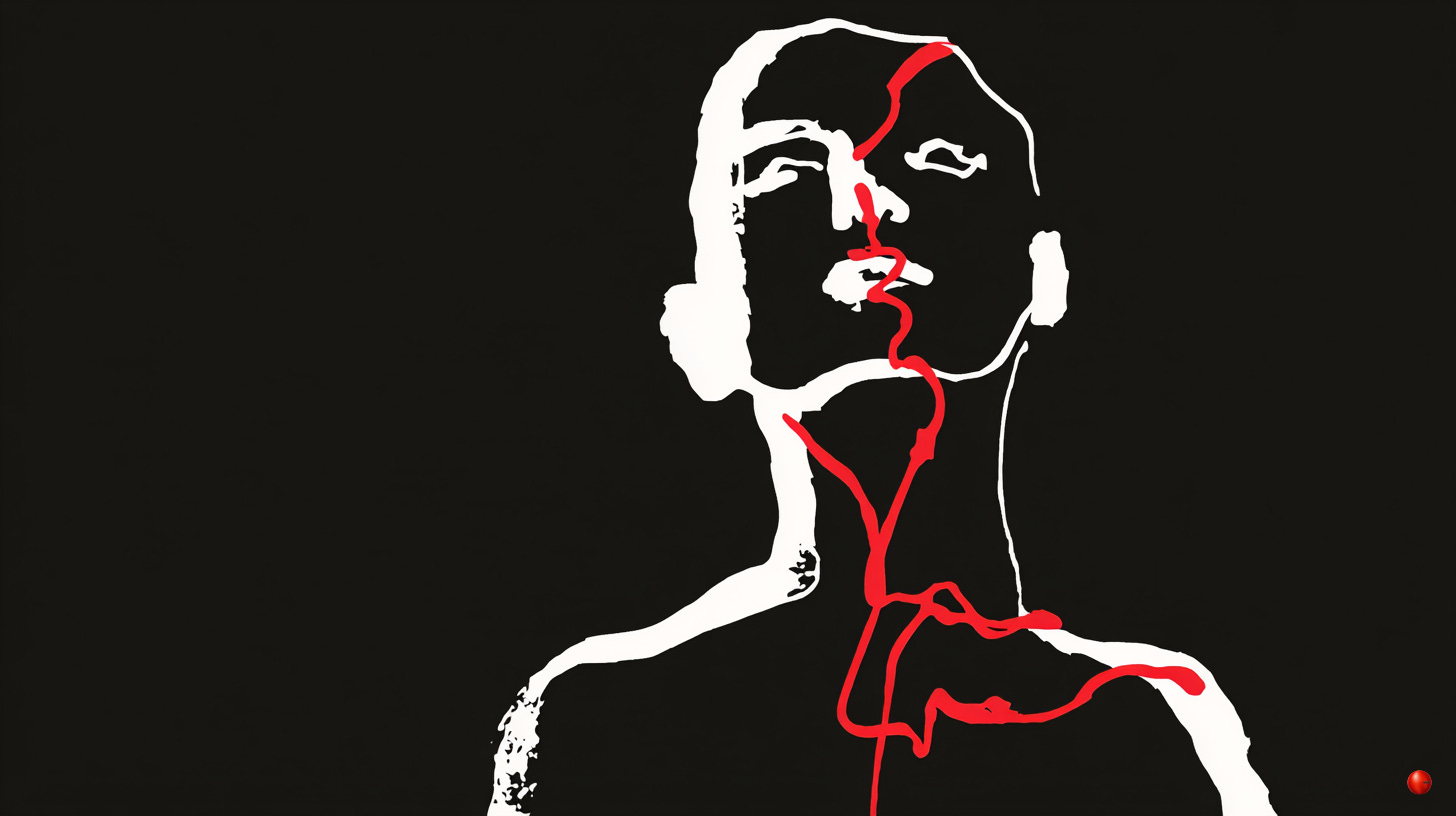
The Private Nation ‘3, Essay V — V
“I must strip down through layers of attenuated meanings, made an excess in time, over time, assigned by a particular historical order, and there await whatever marvels of my own inventiveness.”
— Hortense Spillers, “Mama’s Baby, Papa’s Maybe: An American Grammar Book”

I built a life out of strategies that worked until they didn’t.
Stay small.
Stay grateful.
Stay undetectable.
Stay desirable enough that no one notices you are always rehearsing the exit.
Survival rewarded me for it for fifteen years.
Then the world around HIV shifted, the science grew kinder, the laws moved slower, and I realized I was still living as if anyone who loved me was one phone call away from deciding I was impossible.
Full light did not arrive as a headline or a diagnosis.
It arrived as the private knowledge that even now, with all the resources and language and proof I have, I still do not fully trust myself to be loved without preparing for the day someone decides they cannot stay.

THE ROOM I BUILT AROUND MYSELF
By the time you have lived fifteen years with a virus that once meant death, people call you a survivor like it is a destination.
They see the medication, the lab results, the therapy bills, the way your shoulders no longer live in your ears, and they call it healed.
They are not wrong. They are also not in the room at two in the morning when you realize you have built your entire adult life on a private exit strategy.
You learn early that desirability can cover a lot of what people are afraid to name. Skin the color someone decided was their favorite sin. A body that learned to offer euphoria before anyone thought to ask what it cost. You become someone’s fantasy long before you become someone’s future. They will cross every line to get to you and still flinch, months in, when the word positive leaves your mouth.
I have been wanted so intensely that it sounded like worship.
I have also watched that want evaporate in a single conversation, replaced with careful apologies about not being able to handle it and needing to feel safe and this is about me, not you. They were telling the truth. Survival taught me to nod, to say I understood, to make it easy for them to leave so they did not have to feel like villains.
The problem with surviving is that it trains you to pre-forgive abandonment you have not yet experienced.
Even now, with U=U printed on clinic walls, with injections that mean no pill bottles on the nightstand, with language and resources I could not have imagined at twenty-one, there is still a part of me that measures every new intimacy by how gracefully I think I could watch it end. I do not walk into love assuming betrayal. I walk into it knowing that someone can wake up one morning, decide that loving a Black man with HIV is more bravery than they signed up for, and be entirely within their rights.
They are allowed that choice. Understanding that does not make the disappointment less devastating.
Survival taught me to build my life so that no one person’s leaving would kill me. Full light is the realization that this architecture also kept anyone from ever fully arriving.
The morning someone reads the essay and sends three words back — I felt this — you sit with the notification longer than you should. Not because the witness surprises you. Because it doesn’t change anything. The essay did what it was supposed to do. It reached them in whatever quiet they were carrying. And you are still here, in your own quiet, wondering if being seen in the work counts as being chosen in the life.
This is the part no one discusses honestly. The writing extends the reach. It does not extend the hand.
Someone saves the essay.
Returns to it in the dark.
Finds the sentence that names what they could not.
You are glad for that. You are also aware that the sentence does its job without you. The essay can be intimate without its author being held. A reader can feel less alone in your words while you remain completely alone in your bedroom, in April, watching the number climb.
I have wondered what it means that the most honest version of me lives in public, archived, searchable, and the version people might actually love has to introduce himself from scratch every time.
The essay is evidence. The man is still a risk.
Which means that U=U on a clinic wall and the science growing kinder and every conversation that ended better than the last does not, on its own, convince the part of me that learned early to build exits, that I am now allowed to stay.
The future self I am trying to believe in does not just want to survive being chosen. He wants to stop being surprised when he isn’t left.
THE GRAMMAR OF WANTING
The science did something extraordinary and almost no one talks about what it cost the people who survived long enough to receive it.
For years the body was the argument. Proof of danger. Evidence of what love risked. You carried that argument in your bloodstream and learned to introduce it carefully, strategically, at the exact moment you calculated someone could absorb it without running. You became fluent in timing. Expert in the measured reveal.
What you did not notice, while you were busy managing everyone else’s fear, was that you had stopped wanting things for yourself that required someone to stay.
The update arrived like a quiet administrative correction.
Undetectable equals untransmittable. The virus still present, the transmission route closed. Science reorganized the terms of your body without asking what you had already agreed to in its absence.
I did not know how to receive that. Not fully. The clinic wall said one thing. The part of me that learned the rules in 2011, in a different country of available knowledge, kept administering the old exam.
There is a version of me I can almost locate. He does not rehearse the conversation. He does not pre-draft the exit. He walks into wanting something without building the infrastructure for its collapse before it has had a chance to become anything. He is not reckless. He has simply decided that preparation for loss is not the same as wisdom about love.
I can see him from here.
He is not far. He is standing in the same bedroom, in the same April, and he has stopped measuring.
What I am learning, slowly, is that the haunting is not the virus. The virus has terms now, clear and documented and livable. The haunting is the education I received before those terms existed. Reagan did not create the disease. He created the silence that taught a generation of bodies to expect abandonment as policy. That silence became grammar. It structured how we asked for things, whether we asked at all, what we believed we were allowed to require in return for staying alive.
I am still conjugating myself out of that grammar.
The future self I am reaching toward is not healed in the way people mean when they say healed. He still knows the cost of the word positive in a quiet room. He still carries the history. He has simply decided that carrying it does not mean he has to carry it alone, or that the person beside him is one revelation away from leaving, or that wanting to be chosen is a vulnerability he cannot afford.
He wants. He says so. He does not apologize for the wanting or preemptively mourn it.
I am not there yet. But I am no longer certain I am not on my way.
FULL LIGHT
The work of dismantling is not intellectual.
That is the part I got wrong for a long time.
I understood the architecture. Could name every beam, every exit, every room I built to make loss survivable before it arrived.
Understanding did not move anything. The structure stood because I kept living inside it, kept reinforcing it with small daily decisions that looked like wisdom and functioned as walls.
The body does not update on argument. It updates on repetition, on evidence accumulated slowly in the muscles and the chest and the particular quality of silence after someone stays when you expected them to go.
What I owe the future version of me is not more clarity. I have clarity. I can write about this with precision and publish it and watch it reach people in their dark and still come home and set the table for one without thinking twice. Clarity is not the deficit.
What I owe him is practice. The willingness to stay in rooms I have already mentally exited. To let someone’s presence accumulate past the point where I have decided how it will end. To feel the specific discomfort of being wanted without immediately calculating the terms of the inevitable withdrawal.
The body has its own timeline. I have learned this from fifteen years of injections and lab results and the strange intimacy of watching a number on a page tell me I am still here. The body absorbs slowly. Changes under pressure it does not announce. You do not feel the medication working. You feel, eventually, that you are not getting sicker.
I think repair works the same way.
There will be a morning, and I cannot tell you when, where I wake up next to someone and do not immediately account for the distance between us. Where the warmth of another body does not register first as a liability. Where I receive being chosen without auditing it for the moment it will be revoked.
I cannot manufacture that morning.
I can stop preventing it.
Full light is not gentle because it removes every shadow you learned to navigate by. Every familiar darkness you mistook for home. You have to learn the room again with all the lights on, and some of what you built looks different than you thought. Some of it does not survive the visibility. You have to decide whether you are willing to let the architecture fall so something else can be built in its place.
I am deciding.
Not arrived. Deciding.
The body will catch up when it catches up. What I can do now is stop giving it reasons to stay behind.
Let that be enough—for now.

Author’s Note
I did not realize, until this essay, that the serial was also a room I built.
Five essays on what the state requires of the body without protecting it. I meant every word. I also understand now that writing toward a subject is one of the more sophisticated ways to maintain distance from it. You can be devastatingly honest about a wound and still be standing three feet away from it. The analysis holds. The body stays safe behind the argument.
This essay would not let me do that.
Somewhere in the drafting I stopped being able to refer to the future self in the third person without knowing he was me, present tense, already in the process of becoming. Not hypothetical. Not aspirational. Just slightly ahead of where I am standing, waiting for me to stop building exits long enough to walk toward him.
I published four essays about survival as a political condition.
This one required me to admit that I had also made it a personal one.
That the architecture I described was not only a response to what the state built. Some of it I built myself, with my own hands, out of materials the state provided, yes, but cut and placed by me, maintained by me, lived in by me long past the point where the original threat required it.
That is the thing that could not be taken back.
The serial is finished. The man who wrote it is not.
This essay will remain open to all readers for 10 days.
After that, it will be available to paid subscribers who support the work.
THE PRIVATE NATION is where UNSPUN follows public violence into private rooms—the stories we tell ourselves after the headline scrolls away, the ways a country takes up residence in a single nervous system. It treats interior life as evidence, not escape.
My commitment to myself and to you is that this work is, and will remain, independent of corporate and party money; it answers to the people willing to read it closely enough to be changed. If this piece shifted your footing, that shift has a cost on this side of the screen: time, refusal, and the choice to keep writing as if clarity still matters more than access.
If you are able, a paid subscription or recurring contribution keeps this work answerable to its readers instead of to its silencers. If you are not in a position to support UNSPUN, your willingness to stay with work like this already counts.
THE PRIVATE NATION continues for those willing to stay with the work as it unfolds.

Final essay in The Private Nation ‘3
The serial concludes with Full Light is Not Gentle