

Notes on a Conditional Softness
Notes on Discipline, Desire, and the Weight of Being Gentle


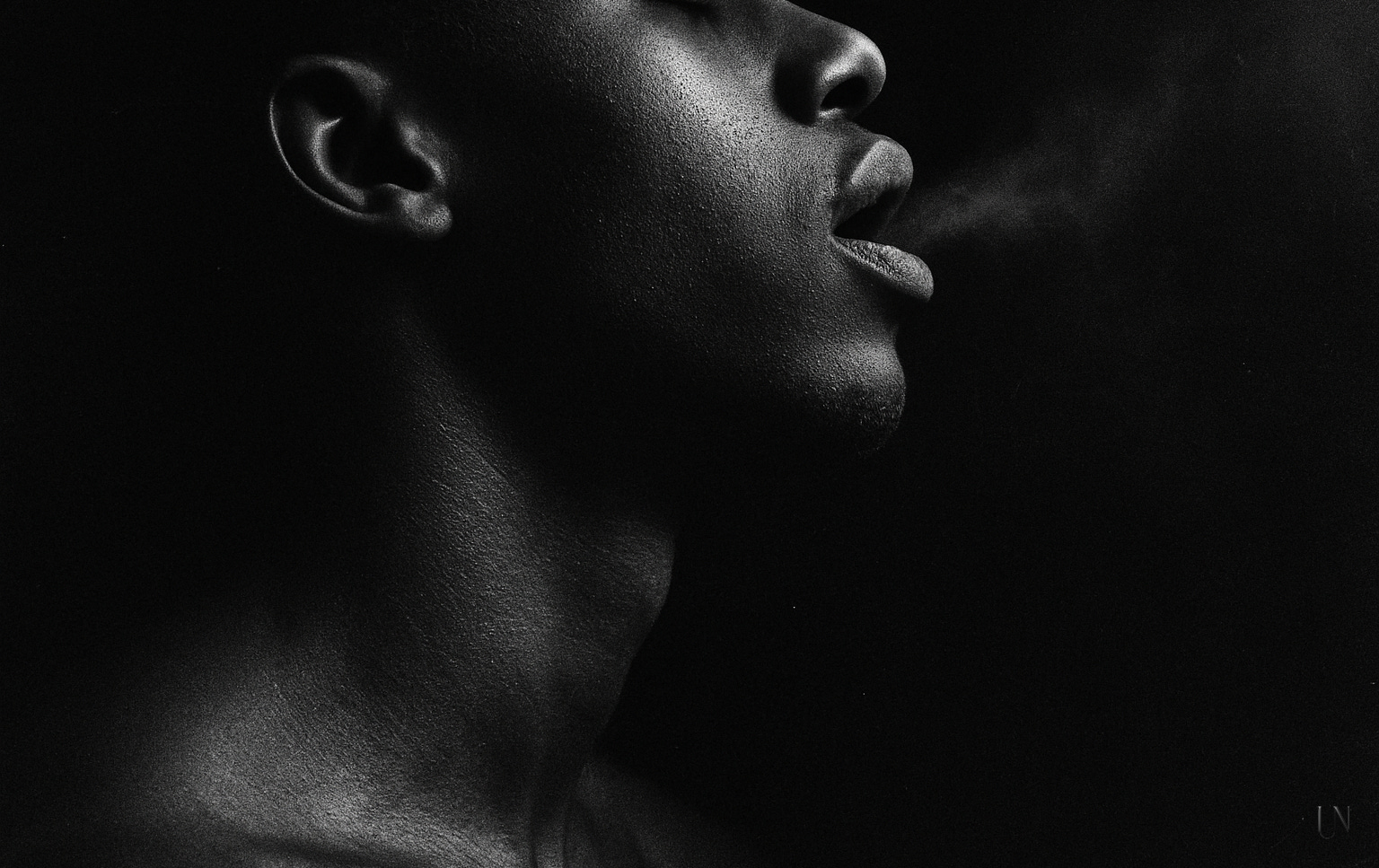
Author’s Note
I was taught that comfort had conditions.
That softness was something you had to earn—by being smaller, quieter, easier to love.
No one said it outright, but the lessons were everywhere: in the ironed shirts, the measured tones, the warnings about how to walk, how to look, how not to be misread. I learned early that gentleness could be mistaken for weakness, and that tenderness—especially in a boy—was a risk few ever learned to hold.
But even then, I wanted to hold it anyway.
To touch the world without apology.
To let my voice tremble and not mistake that for failure.
This piece lives in the quiet between those teachings and that desire.
It’s about the small violences of composure—the way discipline disguises itself as love—and the unlearning required to feel safe inside your own softness again.
It’s about what happens when the body finally exhales after years of being told to keep its voice down.
And maybe, beneath it all, it’s about this:
gentleness was never the problem.
The world’s discomfort was.

Part I: Poem
He was taught that comfort had conditions.
That softness was something you had to earn—
by being smaller,
quieter,
less inconvenient.
The rules came without explanation.
Fold your hands—like the weight of something delicate.
Lower your gaze—
as if the light itself would burn you if you met it.
Speak only when spoken to—
your voice a thin line,
barely drawn,
afraid to bleed outside its borders.
Not out of fear—
but because the air carried memory.
And memory demanded posture.
The house was not unkind.
But it watched,
eyes like soft pressure on his back,
as if the walls themselves whispered of what was allowed.
The quiet in the room
was not emptiness—
it was expectation.
Familiar, like the hum of an electric fan,
a sound that fills the space
but never offers warmth.
He was handed a clean shirt—
its starch cool against his skin,
and told to tuck it in like dignity.
Taught that the wrinkles in his clothes were an affront
to the straight lines of respect.
He was told to smile,
but not too much.
Walk, but not like that—
his hips too soft,
a dance of discomfort.
Speak, but not with softness.
Softness made people nervous—
like a room where the air is too thick to breathe.
There were words
he could not say.
Not just because they were dangerous—
but because no one would say them back.
Desire lived under his tongue,
sweet and sharp,
like honey that stings
when you’ve been told it’s poison.
Not because he felt ashamed—
but because the law did.
Because the church did.
Because the room went quiet
when he crossed his legs.
He learned to sit still in his want,
to let it pass through him like heat—
too much to hold,
but not enough to release.
He hid softness in song lyrics,
in the way he folded his clothes
as if he could neatly tuck away parts of himself
that others didn’t want to see.
In the private ritual
of his own survival.
And when he flinched,
they called it discipline—
like the sting of a switch across bare skin.
And when he stayed,
they called it obedience—
a quiet thing, like a tree bending
but never breaking.
And when he smiled,
they believed it.
Because it was easier than asking
what it cost to be unthreatening.
What it meant to live unnoticed,
and call it protection.
They didn’t say solace.
They said respectable.
They said proper.
They said safe.
But solace does not ask you to shape your limbs
into something they won’t fear.
Solace does not punish your voice
for sounding like light.
Solace does not arrive
through approval
that costs you your name.
Solace is not what they gave him.
It is what he builds
each time he dances alone in his room—
feet tapping quietly,
fingers brushing the air like it’s all his own.
Each time he sings in falsetto,
just loud enough
to hear himself be whole.
It is what lives
in the part of him
he has not yet had to bury.
Part II: Softness Was Never a Lesson
Softness was never a lesson; it was a loss.
No one sat you down to explain that tenderness would have a cost, but the body learned. The body always learns. It memorizes corrections—the raised brow when your laugh is too light, the tightening jaw when your hips forget to straighten, the silence that enters a room the moment your voice lifts one octave too high.
So you adapt. You sand the edges of your tone. You square your shoulders before speaking. You trade sway for stillness, melody for monotone, vulnerability for precision. You master the art of entering rooms without rearranging their air.
They call it composure.
You call it armor that looks like grace.
Softness becomes something you ration. You keep a little for the mirror, a little for the shower, a little for the rare nights when no one is listening. The rest you fold neatly into your day, like fabric you’re afraid will wrinkle under scrutiny.
But even the most disciplined body remembers its texture. Somewhere beneath the starch and structure lives a pulse that refuses to be trained. It shows up at the most inconvenient times—a smile that lasts a second too long, a sigh that carries the weight of something unnamed, a gesture too gentle for the occasion. Someone notices. They call it a slip. You call it truth, escaping.
You begin to understand that the world does not fear your roughness; it fears your tenderness. Because tenderness invites intimacy, and intimacy threatens control. If you are soft, you cannot be contained.
Still, the lessons echo. You hear your father’s voice reminding you that softness is how men get broken. You hear the preacher say the flesh is deceitful, that pleasure is proof of sin. You hear the old songs your mother hummed while ironing your church clothes—melodies about obedience disguised as lullabies. The music still smells like starch and prayer.
There is a violence in that kind of cleanliness. The way it polishes feeling until it no longer shines.
Softness survives in secret places: in the hum that slips from your throat while washing dishes, in the way you choose your shirt by how it feels, not how it looks. In the quiet forgiveness you give to yourself each night for surviving another day of being misunderstood.
Softness becomes practice. It’s the way you hold the steering wheel with two fingers instead of ten. The way you pause before answering a question, not because you don’t know the truth but because you want to say it kindly. The way you keep plants alive, even when the leaves crisp from neglect, because you still believe anything that grows deserves a second chance.
You start noticing softness everywhere—the boy on the bus biting his lip to keep from singing aloud, the old man smoothing the sleeve of his coat before entering church, the woman wiping lipstick off the rim of her coffee cup so no one sees the color she actually wanted to wear. You recognize them instantly. Survivors of the same curriculum.
And you start to wonder what it would mean to fail that class on purpose.
So one night, you stop folding yourself. You let the song play loud enough that the walls have to listen. You dance without watching your reflection. The body moves strangely at first, like it doesn’t trust its own permission. But then the rhythm finds you—the one you buried under years of approval—and your body answers back.
The air shifts. You realize softness is not weakness. It is memory returning. It is the body remembering it was never the enemy.
You start speaking differently too. Your voice shakes sometimes, not from fear but from re-entry. You say the words you used to mouth silently. You tell the truth even when it stings. You stop saying “sorry” for existing in full color. The sound of your own name starts to feel like invitation instead of apology.
The next morning, you catch yourself humming in public. No one looks, or maybe they do, but you keep going. The sound isn’t rebellion; it’s proof of life.
Softness becomes muscle again. Not flinch, not disguise—muscle. It strengthens each time you choose grace over erasure, curiosity over defense, joy over performance. It expands in your chest like breath you didn’t realize you’d been holding.
You begin to understand that discipline without tenderness is just fear dressed up as order. That comfort with conditions is not comfort at all. That love is not meant to require calibration.
And when you see another boy learning to fold himself, you don’t correct him—you invite him to unfold. You say, you can breathe here.
You say, nothing in you is inconvenient.
You say it softly, because softness is how revolutions survive.
What they called obedience was exhaustion.
What they called respect was residue.
What they called maturity was mourning.
But what you’re building now is different.
It is the kind of comfort that asks nothing but presence.
The kind of softness that bends without breaking.
The kind that doesn’t need permission to exist.
It is the opposite of discipline; it is devotion.
And when you finally rest—truly rest—
the air around you hums again, but differently this time.
Not as expectation,
but as welcome.
Not as silence,
but as song.
Postscript
Softness was never absence.
It was the body remembering itself.
To stay gentle in a world that teaches fear—
that is the quietest form of defiance.
You do not owe the world your hardness.
You owe it your wholeness.
So keep breathing where the silence once lived.
Keep singing the small songs that saved you.
Let tenderness be the loudest thing you carry.
REFLECTION INVITATION
For those who learned to fear their own softness:
Who told you gentleness was dangerous?
How did the world teach you to measure your tenderness?
What does it feel like to touch your own ease again?
For those who have punished softness in others:
Whose quiet did you mistake for safety?
What discomfort hides beneath your demand for composure?
When did you last allow someone to be unguarded around you?
For all of us:
How can we build spaces where softness isn’t apology, but belonging?
What might change if we stopped confusing control with care?
How do we make room for tenderness to live loudly?
Sit with these questions.
Feel where they land in your body.
Notice what resists, what relaxes. That is where your unlearning begins.
Share this piece with someone who’s been taught to equate softness with weakness.
Share it with someone who needs to remember that gentleness can still be power.
Over time, these fragments—yours and mine—will gather into a living archive,
a record of what the world tried to harden,
but could not.
#EveryWordINeverSpokeAloud #BlackQueerPoetry #NotesOnAConditionalSoftness #TendernessAsRebellion #LanguageAsWitness #WeStaySoft
Next in the series—11/2
A Study in Fragility
Fragility has cracked the surface.
You feel it, don’t you?
Not in your fists—
you’ve always known how to clench those.
But in the stillness after.
In the silence that stretches when the room empties,
when there’s no one left to fear you into form.
UNSPUN publishes longform essays, op-eds, and visual documents tracing the language of power in real time.
This piece appears in Every Word I Never Spoke Aloud, the series devoted to interiority, survival, and the politics of silence—where the unsaid becomes record, and the private self finally speaks aloud.
To engage or contribute, write to unspunworld@substack.com, or follow UNSPUN for new releases and ongoing dialogues.
Every word here is researched, written, and sharpened by one person—me. If you value work that names what others won’t, consider becoming a paid subscriber. It keeps this space independent, and it keeps pieces like this possible.
I hope for your softness to continue surviving and that you be loved in your entirety. Your words, your awareness of self and reclamation of the parts of you that have been outright shunned, is an inspiration. You are beautiful in your softness, you are beautiful as you.
Your voice is rare and truly splendid. Your words puncture the surface and take me on a journey of depth and opening. Thank you!!