


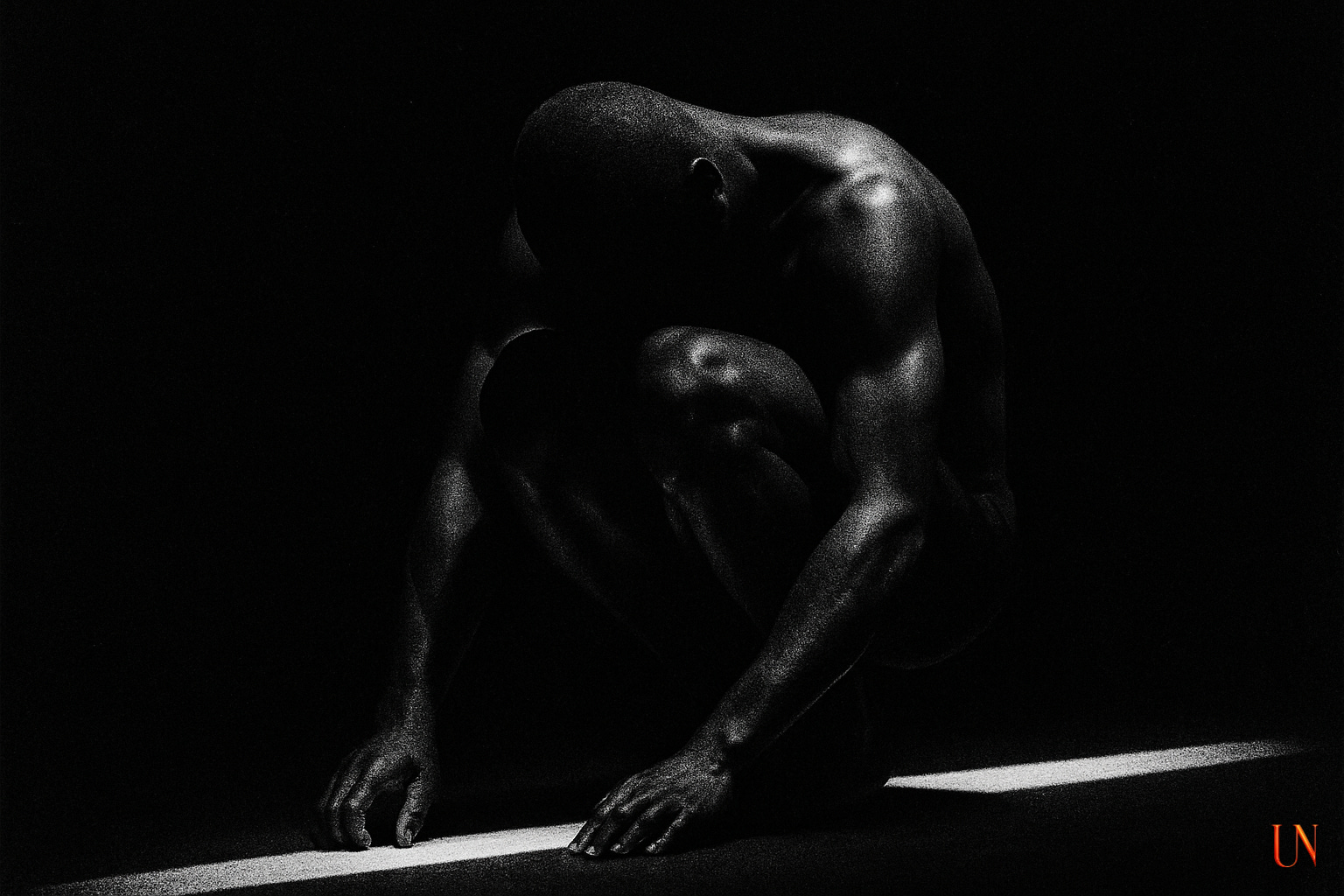
Preface
This work emerged from the space between belonging and not belonging, from the exhausting labor of existing in places that tolerate but do not welcome. It is about the violence of conditional acceptance—how inclusion can become its own form of erasure when it requires us to leave parts of ourselves at the door.
For those who have been “allowed” rather than invited, who have been given seats at tables but no voice to speak, who have spent years translating themselves into palatable versions for others’ consumption—this is an attempt to name that particular kind of harm. The harm that comes wrapped in progress. The harm that photographs well. The harm that calls itself diversity while demanding conformity.
This is about the moment we stop being grateful for crumbs. The moment we recognize that our presence was never a favor granted but a right inherent. The moment we understand that we don’t need anyone’s permission to be whole.

Part I: Allowed, Not Invited
They let me in.
But only because I didn’t ask too loudly.
Only because my voice didn’t echo.
Only because my presence didn’t take up space
they weren’t already willing to surrender.
I was allowed.
Not invited.
Not welcomed.
Just…permitted.
Like an exception.
Like a conditional clause in fine print.
Permission is a slippery kind of cage.
They let you speak
as long as you don’t raise your voice.
They let you stay
as long as you stay grateful.
They let you belong
as long as you know your place.
And every moment of inclusion
feels like a balance beam.
One wrong step,
and the door disappears.
They called it tolerance.
But what they really meant was:
we’ll allow your existence
so long as it doesn’t interrupt ours.
So long as your queerness is dressed in discretion.
So long as your Blackness knows how to smile.
So long as your HIV is invisible,
unspoken,
untouched.
So long as we don’t have to change.
There is a violence in this kind of access.
It cuts in silence.
It bleeds in policy.
It looks like diversity on the brochure
and like indifference in the boardroom.
It is the nod without the name.
The smile without the safety.
The chair at the table
without the mic.
It is being shown the room
but never handed the key.
I used to say thank you
for the scraps.
For the almosts.
For the shadowed seat in the corner.
I used to call it progress
just to be there.
But presence
without power
is performance.
And survival
without voice
is not enough.
So now.
I do not want to be allowed.
I want to arrive.
Unapologetically.
Undeniably.
Unnegotiated.
I want to enter
without shrinking.
Speak
without translating.
Exist
without being someone’s lesson.
You don’t need to allow me.
I was already here.
And I am no longer asking.
Part II: From Tolerance to Thunder
Permission does not arrive as generosity. It arrives as furniture already arranged, as a chair left wobbling in the corner, as a paper cup offered while the others sip from glass. It looks like access, but it feels like probation. To be “allowed” is to stand in a room where every surface reminds you that you were not the one who set the table, that your presence is conditional, revocable, always one misstep from being rescinded.
They call it tolerance, but tolerance is brittle. It sounds like nods that do not use your name, like smiles that break before they reach the eyes. It is inclusion rehearsed for the brochure, then forgotten in the boardroom. It asks for your gratitude even as it requires your disappearance. Every space of “welcome” becomes a balance beam: one wrong word, one unguarded gesture, and the door vanishes.
To be tolerated is to learn choreography. Shoulders angled just enough to signal respect, voice pitched higher to avoid threat, laughter clipped short before it echoes. You practice disappearing by degrees: folding your hands in meetings, tightening your knees on trains, trading full gestures for the smallest nods. Even joy is rationed, parceled into doses that will not disturb. What they call inclusion teaches you to erase yourself so completely that eventually you mistake the erasure for survival.
And yet survival is not the same as living. Presence without power is performance. A seat at the table without the microphone is a staged photograph, not an invitation. Gratitude for crumbs is not progress, only a strategy of endurance disguised as achievement. The longer you bow to the architecture of tolerance, the heavier your silence becomes.
But thunder refuses silence. It does not ask permission before it arrives. It does not shrink to fit the room. Thunder is the voice that carries at full volume, the laugh that bends you double, the step that echoes against marble floors. It is every part of the self—Blackness, queerness, status, survival—brought whole into the room without apology, without translation, without disguise.
This is the shift: from balancing on the beam to breaking it. From sipping water in paper cups to recognizing that your presence is not a favor but a fact. From thanking them for crumbs to remembering that the feast was always yours to claim. Thunder is not invited; it declares itself. It is the sound of bodies uncurled, of voices unclenched, of arrival that can no longer be negotiated.
The brass door handle will always distort your reflection. But you do not need its shine to confirm your existence. You are not looking for yourself in their mirrors anymore. You are the door, the room, the building. And every step you take now reverberates like weather, like a storm no one can permit or forbid. Every movement declares the truth they worked so hard to bury: you were already here.
Postscript
They will call this anger. They will say you’ve become difficult, that you’ve changed, that you used to be easier to balance with. They will mourn the version of you that crouched on the beam, that folded yourself small, that spoke in apologies and rationed laughter. Let them grieve.
Your wholeness was never meant to wobble on their narrow line.
The spaces that require you to shrink are not the same as belonging. The tables that offer paper cups while sipping from glass were never yours to beg from. The rooms that only permit you in fragments will never be home.
This is not about burning bridges. It is about stepping off the beam. It is about remembering that thunder does not wait to be welcomed.
Permission is slippery because it was never theirs to grant.
You were already here.
REFLECTION INVITATION
For those who have been “allowed”:
Where in your body do you feel the strain of balancing on the beam—shoulders tight, laughter clipped, voice bent higher than its truth?
How has tolerance taught you to ration joy, to disappear by degrees, to confuse erasure with survival?
What crumbs have you mistaken for progress? What paper cups have you held as if they were chalices?
Can you remember the last time you let your voice thunder—full, unmeasured, unapologetic?
For those who have done the permitting:
What rules, spoken or unspoken, mark the edge of your welcome?
How much of your comfort depends on someone else’s contortion?
What would break if those you “tolerate” stopped performing gratitude and simply arrived whole?
Can you imagine inclusion that does not wobble like a beam, but steadies like ground?
For all of us:
How do we build spaces that do not offer permission but recognize presence?
What does it mean to move from balance to abundance, from tolerance to thunder?
How do we stop confusing survival with success, performance with belonging?
What must we unlearn in ourselves to welcome wholeness in others?
Take these questions into your body. Notice where they tighten, where they release. Both are information. Both are invitations to arrive differently.
Share this piece with someone who has been permitted when they should have been welcomed, someone carrying a silence that deserves to be spoken.
Over time, these fragments—yours and mine—will be gathered into a living chorus. An archive of what permission tried to withhold but could not.
#EveryWordINeverSpokeAloud #BlackQueerPoetry #LanguageAsWitness #WeSpeakAnyway
Next in the series—10/5
You Were Worth the Syllables
A poem for the ones who stood at the edge of the circle and were never named. For the friend-of-a-friend, the plus-one who was never claimed, the smile that never got tagged. An elegy for the unacknowledged and a kneeling toward the unseen.

This piece resonated deeply with me because it names the quiet violence of conditional belonging in a way I’ve often struggled to put into words. The first time I was invited to speak as a guest, I told my story without shame, and I understood what it meant to be recognised rather than permitted. From then on, I committed to building my own rooms. Just two years later, I’ve finished a book that does not conform to the market, because belonging should never be conditional. Presence is not a favour granted. It is enough.
Taylor, your piece moves like a storm gathering, patient, deliberate, and then undeniable. You give language to the wound of being “permitted” while exiled from wholeness, and in that naming you strip away the mask that tolerance wears.