

RECOGNITION
Notes on Execution on Portland Avenue


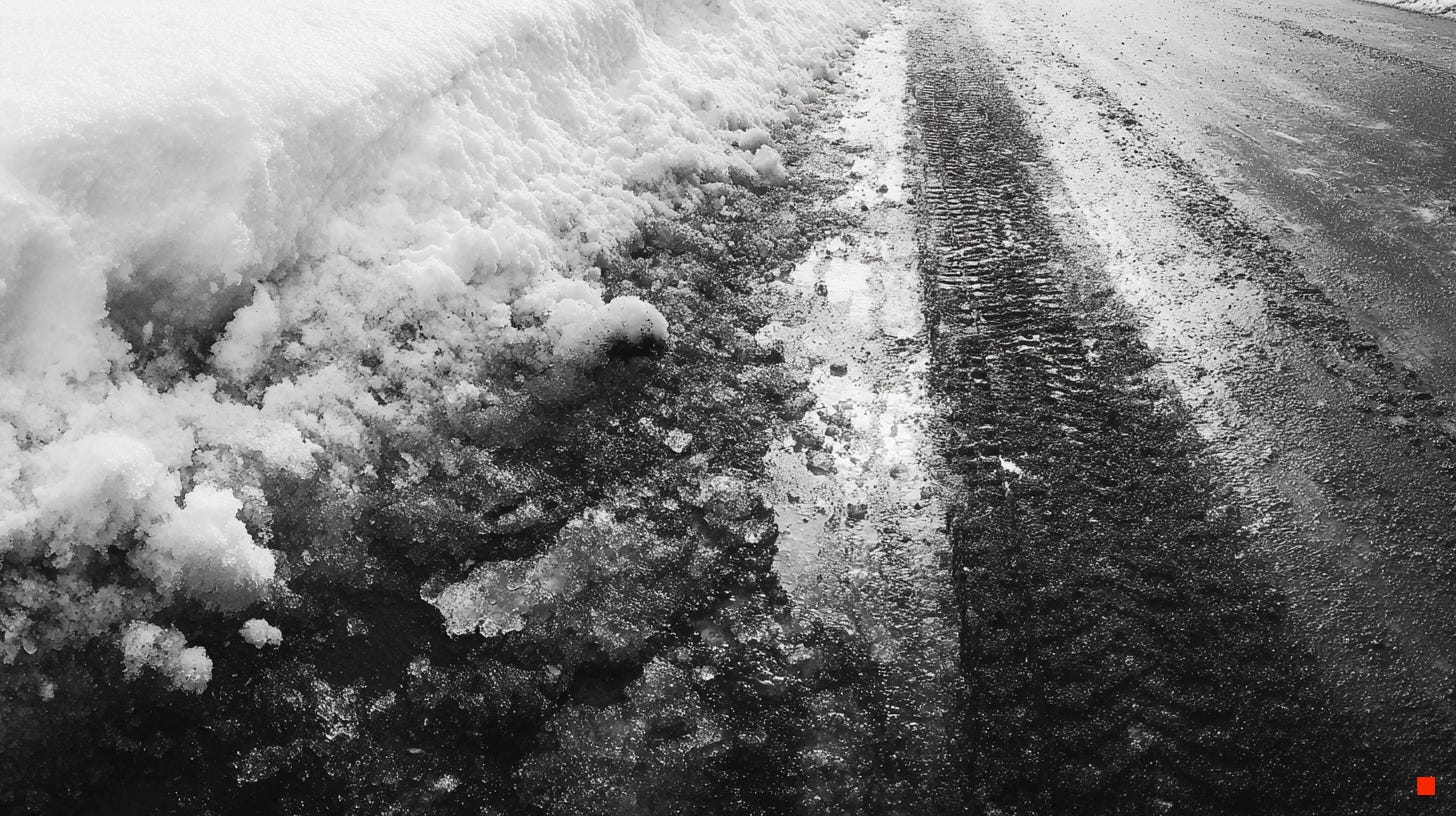
“How does one revisit the scene of subjection without replicating the grammar of violence?”
— Saidiya Hartman
I wrote this less than twenty-four hours after I wrote the first piece.
Last night at 11:19 p.m., I published Renee in the Quiet Between Shots. What I felt in my body. The way violence travels through a nervous system before language can catch it. The recognition that happens in flesh before it reaches thought.
This afternoon, I am writing what was destroyed so that feeling could be dismissed.
Her blood is still frozen in the snow on Portland Avenue. Federal agents are still crafting their narrative about vehicles as weapons and split-second decisions. Forensic analysts are still reviewing footage frame by frame, trying to prove what the body already knew.
I cannot stop seeing her face in the photograph from before. Ocean behind her. Wind in her hair. Smiling. Alive in the way people are alive when they do not yet know that someone will shoot them in the face for watching.
I am writing this because four masked men surrounded a woman stopped in the street, one of them fired first, and no one will ever see their faces.
I am writing this because the person who decides when federal killing is justified has already shown the country what she calls leadership.
I am writing this because I am afraid.
Not of retaliation. Not of consequences. I am afraid that we will forget how to recognize execution when we see it. That we will accept the narrative. That we will believe a woman waiting patiently in the street deserved to be shot in the face because she was visible while they wanted to remain invisible.
I am afraid that recognition itself is becoming dangerous. That showing your face while documenting state violence is now a death sentence. That the gap between what happened and what will be called self-defense is where accountability goes to die.
This piece will not change that.
But I need you to see her face before they destroyed it.
I need you to know she was stopped, waiting, being courteous.
I need you to understand the sequence: he fired first, she reacted, he claimed her reaction as justification.
I need you to count the masks: four.
I need you to count the faces: one.
I need you to remember that the only face in this story belongs to the woman they killed.
I cannot look away from this.
Neither should you.

Portland Avenue on a January morning.
Snow blanketing residential yards, that particular Minneapolis cold where sound travels sharp until violence breaks it open. Single-family homes with ordinary porches. Bare trees against blue sky. Someone’s Christmas lights still strung, blinking red and white in daylight. The smell of exhaust crystallizing in frozen air.
Two dark vehicles. Tactical gear. No markings.
Men emerging in winter black, faces covered. Not for cold. Masks when no one else on the street needs them. Moving with the coordination of men who know what they came to do.
A red Honda Pilot stopped in the street. Legal observer. Camera visible. Face exposed. There to document, which is why her face had to be destroyed where she sees.
The sound of boots on wet pavement. Ice scraping under tires. Commands without introduction. Not questions. Orders.
A door handle yanked.
Resistance.
The engine starting.
She begins to leave.
She rolls forward slowly, turning left, then stops. Waiting for other vehicles to pass through the intersection. Patient. Courteous. Following the ordinary logic of traffic. Not ramming. Not weaponizing. Just waiting her turn.
A silver pickup arrives while she sits there, stopped.
Two more agents exit. Four now. All masked.
One filming on his personal phone. Not a body camera. His phone. As if this needs recording but not officially.
They move toward her vehicle while she waits.
And then.
Not the sound you expect. Not movie gunfire. Real shots are flatter. More concussive. The physics of bullets meeting windshield glass in cold air.
Once. Twice. Three times.
The specific crack of metal punching through what separates driver from winter morning.
The car lurches forward. Momentum carrying what’s been destroyed until metal meets metal and the engine dies. The only sound left is witnesses screaming and someone yelling, Get out of the fucking car! at a woman whose face no longer exists in the way faces exist.
Blood on snow goes darker than movies show. Deeper. The color it turns when it freezes as it falls.
He discharged his weapon more than once. Through glass. Into her face.
While his own face stayed covered.
Hers did not.
I keep trying not to picture it.
But the face arrives first when I close my eyes. Not the violence. The recognition that she could be recognized. That visibility itself had become dangerous. That showing your face while documenting state violence had become the thing they could not allow.
She came to witness. Face exposed. Camera visible. The legal observer with nothing to hide because transparency was the point.
Witnesses show their faces.
That is how testimony works. You offer yourself to be seen so that what you saw can be believed.
They wore masks.
All four of them that January morning while neighbors watched from windows. Two at her vehicle. Two arriving in the silver pickup. All masked. Not for safety. Not for health.
For immunity.
So that after the bullets and the chaos and the snow stained dark, they could remove the masks and return to lives that require no accounting for who they were or what they did on Portland Avenue when they killed her.
Police wear body cameras. Imperfect, yes. Footage disappears, gets withheld, malfunctions at convenient moments. But the structure exists. The premise that violence might be recorded. That faces might be attached to actions.
ICE wears masks and carries no cameras.
They float through the gap between federal authority and local jurisdiction. Between the moment of violence and the space where consequences live.
Masked. Unrecorded. Untraceable.
Able to appear on a residential street on a January morning, coordinate an approach while a woman waits patiently in the street, discharge weapons into her face, and vanish back into the immunity they wear like winter gear.
She was trying to leave.
I have watched the footage. Multiple angles. Synchronized timestamps. Frame by frame.
She rolled forward slowly, turning left, then stopped. Waiting for other vehicles to pass. Patient. Following the ordinary logic of traffic.
While she sat there, the silver pickup arrived.
Two more agents exited. Four total. All masked.
One crossed toward her vehicle, phone in hand, filming. Not officially. Not in a way that could be subpoenaed.
The other agent positioned himself to the left side of her vehicle.
And he fired.
First.
Before any contact. Before any alleged ramming. Before any claim of being run over.
He opened fire on a woman sitting stopped in her vehicle, waiting for traffic to clear, with three other masked agents surrounding her.
The vehicle lurched.
Either from the impact of bullets or her body’s involuntary response to being shot in the face or a desperate attempt to escape what was happening.
Momentum carried it forward.
The agent filming may have been clipped.
But the shooting had already started.
The sequence is clear.
He fired first. She reacted. He claimed her reaction as justification.
This matters.
This is the difference between self-defense and execution.
Not once. Not twice. Three times through the driver’s side window. Into her face. While she had been stopped. While she had been waiting.
And then, after the bullets had already entered her face, after she was already dying, he can say he feared for his life.
But the footage shows the truth.
This is not self-defense.
This is execution with a prepared alibi.
The body knows the difference even when institutions pretend not to.
The federal government will call this self-defense.
They will talk about vehicles as weapons. Split-second decisions. Chaos.
But the coordination tells a different story. The masks tell a different story. The absence of cameras tells a different story.
If the work is lawful, why coordinate in masks?
If the shooting is justified, why carry no cameras?
If he was truly in danger, why does the footage show him firing first?
If you are acting within your authority, why ensure no one can ever identify who pulled the trigger?
The gap is not accidental.
The gap is the point.
They operate in a space designed to make accountability structurally impossible.
Masked agents. No cameras. Federal authority. Local impotence.
And a woman dead for documenting.
The person calling Renee a domestic terrorist shot her own puppy in a gravel pit and wrote about it proudly as evidence of leadership. She then shot the family goat. This is documented. This is not metaphor.
This is who decides, within hours of Renee’s death, that the woman documenting ICE operations was a terrorist who deserved what happened.
This is who determines when killing is justified.
A person who has already described that kind of killing as leadership.
The pattern is not subtle.
When you are accustomed to killing witnesses to your authority and calling it problem-solving, you develop a methodology.
You learn that the issue is not behavior but observation.
You learn that elimination is easier than accountability.
I cannot stop seeing her face in the photograph from before.
Ocean behind her. Hair moving in wind. Smiling. Present. Alive.
She offered her face.
They covered theirs and fired.
There is a reason they shoot the face.
To kill, you shoot center mass.
To eliminate a witness, you destroy recognition itself.
He knew what he was doing when he positioned himself to the left side of her vehicle. When he fired three times through glass. When he fired first. When he ensured that even in death, the face could not be shown without trauma.
This was not panic.
This was procedure.
The procedure of agents who know they will not be identified.
The procedure of a state that has decided documentation is a threat worth eliminating.
I do not know what justice looks like when killers wear masks and carry no cameras.
I do not know what accountability means when the only visible face is the one destroyed.
I do not know what safety means when authority has already told us what it calls leadership.
But I know this.
Her face is the only face in this story.
And that is not an accident.
Let that be enough—for now.
Renee Nicole Good.
Author’s Note
This piece was written less than twenty-four hours after Renee in the Quiet Between Shots.
The first essay stayed with what happened in my body. This one records what was destroyed so that bodily recognition could be dismissed as hysteria, overreaction, or anything other than an accurate response to witnessing execution.
I wrote about the face because the asymmetry tells the entire story. Theirs were masked. Hers was exposed. Recognition requires visibility, and visibility has become dangerous when documentation threatens power. The destruction of her face was not incidental to what happened. It was central to it.
I wrote about sequence because order matters. He fired first. She reacted. Her reaction was then used as justification for what had already occurred. This distinction is the difference between self-defense and execution, and it does not disappear because institutions prefer confusion.
I wrote about authority because leadership is not abstract. It has a history, a temperament, and a record. The person who decides when state killing is justified has already described, in her own words, what she believes leadership requires. That context is not rhetorical. It is explanatory.
Some will say this is too soon, too angry, too one-sided. I disagree. Recognition does not benefit from delay, and execution does not deserve balance.
Her name was Renee Nicole Good. She was here. She witnessed. She was killed for it.
UNSPUN publishes longform essays, op-eds, and visual documents tracing the language of power in real time.
This piece appears in UNSPUN, the publication’s central body of work interrogating truth, language, and the systems that shape both.
To engage or contribute, write to taylorallynofficial@gmail.com, or follow UNSPUN for new releases and ongoing dialogues.
If something in this piece stirred you, that stirring is the point. Subscribe below to keep listening for what language can still heal.

Every word here is researched, written, and sharpened by one person—me. If you value work that names what others won’t, consider becoming a paid subscriber. It keeps this space independent, and it keeps pieces like this possible.
Not since the agonizing murder of George Floyd has a video shaken me to the core. Until watching this execution. And the evil sickening responses from MAGA and the fascist administration running the US.
I can’t stop thinking about the loved ones of those killed by police and by the ICE goons.
I can’t stop thinking about the witnesses.
I can’t stop thinking about the detainees in ICE facilities and what they are likely experiencing.
I can’t stop thinking about every American who feels vulnerable and scared right now.
I used to visit the US every year. I won’t be back until ICE is abolished.