

Return Receipts
Notes on Presence, Return, and the Sentences Between Us


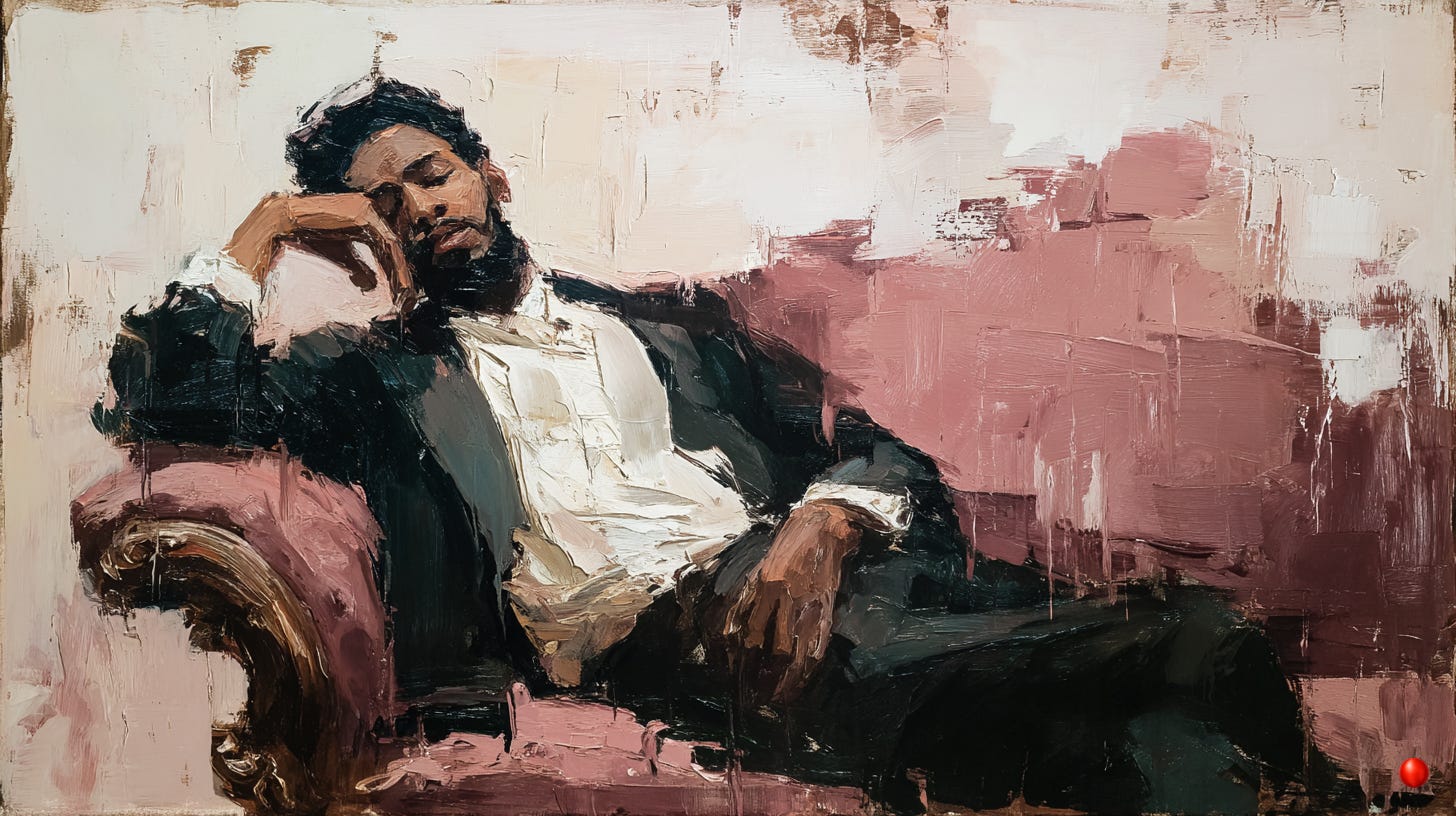
“A wound gives off its own light.”
— Li-Young Lee
I did not sit down to write about God or mortality or survival so anyone would call it a miracle. I wrote because I could feel the ground moving and I needed a sentence to hold on to.
What I did not account for was the echo.
I wrote to keep my own body from slipping off the edge, and the words went out and landed in other people’s hands. They started telling me what they saw there. Some said they could feel the mind wrestling with the body’s “no more,” and promised that if the day came when I could not write, they would carry the memory of how I did. Others said the miracle was not God at all, but the simple fact of staying, of speaking plainly from the place most people only pray from in private. I was trying not to disappear. They were reading it as evidence that I was already a presence they could not bear to lose.
No one explains how it feels when something you wrote to keep yourself here becomes what other people point to when they are trying to stay. They call it vulnerable, balanced, necessary. They say it gives them permission to rage at God, to curse in a prayer, to admit that the scripts they inherited about faith have failed them.
I read their words on a screen in my hand and realize we are doing the same work from different angles. I am naming what it feels like to live with a body and a mind that do not always agree. They are naming what it feels like to live with a God and a history that do not either.
Some reach for language that sounds like kinship.
They say the writing feels like a mother they never had, like a blanket sewn by ancestors they cannot claim but recognize by touch. They describe hunger they did not notice until they tasted something that fed it. I know that hunger; it is the same one that sends me back to the page. I am not writing from the far side of it. I am writing at the table, still unsure if there will be enough for everyone, including me.
If it looks like clarity from the outside, it is only because the sentences are holding shape while I am still figuring out how to stand inside them.
There is a strange kind of relationship that forms in that space. Most of the people who read me will never sit across a table from me, but they keep meeting me at the same door.
They arrive in the comments, in emails, in quiet messages sent long after a piece has gone up, and they talk to me as if we have been in conversation for years. In a way, we have. They have been living with questions they never had language for. I have been trying to build sentences strong enough to stand up under the weight of those same questions.
What that teaches me, over and over, is that continuity is not the measure. The work moves in tides. Some weeks it floods the shore, some weeks it pulls back so far it looks like I am gone. They drift in and out, carrying their own weather. None of that seems to break whatever this is.
That is the part that unnerves me and steadies me at the same time. I am afraid of vanishing, of becoming one more unfinished thought in a world that forgets quickly. They are afraid I will stop writing, that the sound they have come to lean on will go quiet.
There are days when I believe them, when I can feel the sentence thinning out and I know, I know, that one day it may not come back.
Yet the thing that keeps happening is not guarantee, but return.
They come back to the work after absence. I come back to the page after doubt. The relationship lives in that pattern, not in any promise that we will never step away.
When I pay attention, I can see that this is what the writing has been trying to tell me from the beginning. The point was never to arrive at a finished wisdom and hand it down. The point was to keep making something sturdy enough to hold both the leaving and the coming back, both the hunger and the brief, startling moments of being fed.
If there is any miracle in that, it is not that I know what I am doing. It is that the door still feels real when we reach for it, even on the days I am not sure I can stand behind it.
I think about this when people call what I am doing a legacy. They talk about the way the work will live on after I am gone, how they will remember the sentences, how they will not let anyone forget. It is tender and terrifying to hear.
I am still using these same sentences as a reason to stay.
On the nights when my chest tightens and my brain begins listing exits, it is often one stubborn line on the screen that pulls me back from the count. I am not writing toward an afterlife. I am writing toward tomorrow, toward the next time I have to decide again that being here is worth the cost.
The responses remind me that I am not the only one doing that math. Somewhere, a person is reading on a lunch break, or in a parked car after work, or in a bed they have not left in days, and deciding, just for that hour, not to give up on themselves.
They do not need me to be certain. They need me to be honest about what it takes. They need proof that someone else has stood in that same narrow hallway between staying and leaving and chosen, for one more day, to remain.
So I try to keep the work faithful to the place it comes from. Not polished into reassurance. Not edited into something that sounds wise but costs me nothing.
If a sentence feels too fluent, too easy, I know I have stepped away from the truth of it. The pieces that seem to land hardest are always the ones that took something from me to write. They are the pieces that left me a little more tired and, paradoxically, a little more here.
I do not know how long I will be able to write like this. Bodies change. Circumstances shift. Attention frays.
What I know, for now, is that as long as I can feel the ground moving, I will keep reaching for language that can hold at least a small piece of it still. I will keep trusting that somewhere, someone will meet me at that door again. Not because I have the answers, but because we are both trying, in our own ways, to stay.
If there is a through-line to all of this, it is simple and not simple at all. I am writing to survive, and people are reading to survive, and somewhere between us the sentences are doing a kind of quiet work neither of us can fully name.
That is enough reason to keep going.
Let that be enough — for now.
Author’s Note
I wrote this in the afterglow and exhaustion of being told I was a miracle on a week when I could barely make myself get out of bed. Putting it down cost me the illusion that I am writing from safety. I am not.
I am still inside the questions I describe here, still bargaining with my body and my mind, still unsure how long I can keep doing work that takes this much from me and also gives this much back.
If there is any clarity in these pieces, it belongs to the sentences, not to me.
I am just trying, for now, to stay long enough to mean them.
UNSPUN publishes longform essays, editorial encounters, and visual documents tracing the language of power as it operates in real time.
This work appears as part of UNSPUN’s ongoing inquiry into how authority circulates, how permission is granted, and how silence functions as structure rather than absence.
If something in this piece altered your footing, that alteration is intentional.
What follows does not ask for agreement. It asks for attention.
UNSPUN continues for those willing to stay with the work as it unfolds.
I think that's always been the beauty of your writing, for me. It's never been a belief or expectation that you have it all figured out, that you are done with the work, or you're more okay than me... It's how honest you are about the work, about how the questions you are asking still very clearly live in you as questions, not answers. That is the place where I always seem to find myself in your words. That is what keeps me seeking your words and presence. You name things that, despite our different circumstances and paths, make me feel less alone. Sometimes they are things I have also named before, and I feel a kinship around that shared recognition, other times they are things I have yet to find the language for, but have felt for a long time.
You would be a miracle even without these words. Even if I never saw you and told you that you are one. You are a miracle because you are. Full stop. Your words are merely the vehicle which has granted me the fortune of witnessing that miracle.